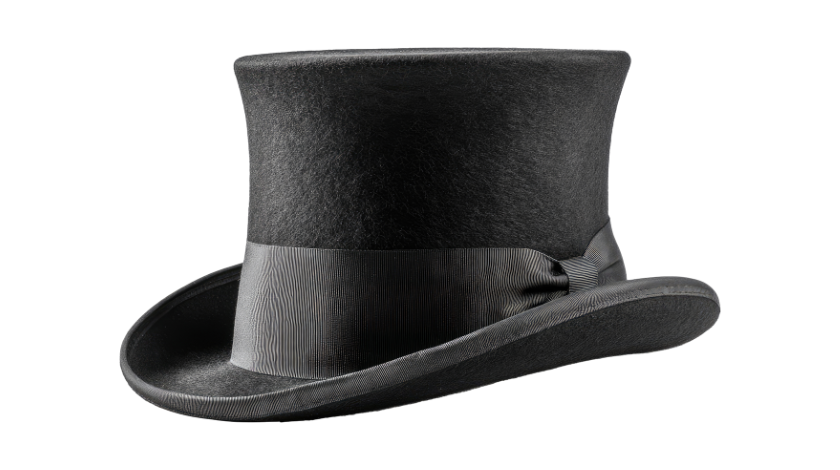
There’s something undeniably powerful about putting on a top hat. The moment that the silk plush cylinder settles onto your head, you feel different. Taller, perhaps. More commanding, certainly. Connected to centuries of tradition in a way that no other piece of clothing can quite match. I remember the first time I tried on a proper top hat at a vintage shop in London. It wasn’t even my size, sitting slightly loose and requiring me to hold my head just so to keep it in place. Still, I caught my reflection in the mirror and understood immediately why this particular style of headwear has maintained its grip on our collective imagination for over two hundred years.
The top hat isn’t just an accessory. It’s a statement. A declaration that you understand the rules of formal dress and choose to honor them. In an age where baseball caps and beanies dominate everyday headwear, choosing to wear a top hat and tails places you in direct conversation with history. You’re not merely getting dressed; you’re participating in a tradition that stretches back to the late 18th century, when George Dunnage, a hatter from Middlesex, created the first silk top hat in England in 1793
Understanding the Anatomy of Morning Dress
When we talk about “top hat and tails,” we’re really discussing morning dress, the most formal daytime attire a gentleman can wear. This isn’t something you throw on for a casual Sunday brunch. Morning dress represents the pinnacle of sartorial elegance, reserved for weddings, royal events, formal ceremonies, and the most prestigious horse racing events, such as Royal Ascot’s Royal Enclosure.
The ensemble consists of several carefully coordinated components. The tailcoat or morning coat forms the foundation, typically in charcoal or black, with those distinctive tails extending to the back of the knees. The front curves away from the waist, creating that elegant silhouette we associate with Victorian gentlemen and modern grooms alike. Underneath, you’ll wear a waistcoat in ivory, cream, or a subtle pattern that allows for personal expression while maintaining formality. The trousers are striped or plain, never matching the coat exactly, and your shirt must be white with a formal morning collar.
But it’s the top hat that transforms this from merely formal wear into something iconic. The traditional top hat stands six to seven inches tall, crafted from silk plush with a polished, lustrous sheen that catches the light in a way no other material does. The brim measures roughly 2.5 to 3 inches, providing just enough shade without appearing casual. Inside, you’ll find silk lining and a leather sweatband that, with proper care, will mold to your head over time.
The Historical Journey from Beaver Fur to Silk Plush
To truly appreciate the top hat, you need to understand what came before. In the earliest days of the 19th century, these hats were made from felted beaver fur, which provided excellent water resistance and a soft, luxurious texture. The beaver trapping industry in North America essentially existed to supply the demand for these hats, with John Jacob Astor building his fortune on this trade before silk eventually took over.
The transition to silk “hatter’s plush” wasn’t immediate. Many gentlemen resisted the change, preferring the warmth and texture of beaver fur. But by the middle of the 19th century, silk had become the standard, with black being the most formal color and grey offering a sophisticated alternative for daytime events. The 1840s and 1850s saw the style reach its most extreme form, with ever-higher crowns and narrow brims creating the “stovepipe” hat.
Abraham Lincoln didn’t invent the stovepipe style, but he certainly became its most famous advocate. Standing six feet four inches tall already, Lincoln chose to wear hats with eight-inch crowns that added significantly to his already imposing height. Historians speculate that he initially adopted the style as a political gimmick to make himself more memorable. Still, it became so associated with his image that we can barely picture him without it. Lincoln’s hats were often battered and worn, giving him, as one historian called it, a look of “unassuming simplicity” that contrasted with the polished perfection of European formal wear.
What many people don’t know is that Lincoln used his hat as a portable filing cabinet. He would regularly store important papers and letters inside the crown, pulling them out during speeches with a theatrical flourish that must have delighted his audiences. There’s also the famous story of Lincoln removing his hat to bow to an elderly Black man in Richmond, Virginia, after the Civil War. At a time when such respect across racial lines was practically unheard of, this simple gesture of removing his hat became a powerful statement about the new social order he was trying to create.
Modern Applications: When to Wear Top Hat and Tails Today
You might be wondering where, exactly, one wears a morning dress in the 21st century. The answer is more places than you’d think, though the occasions remain special by design. Traditional weddings remain the most common setting, particularly in the United Kingdom, where the groom, groomsmen, fathers of the bride and groom, and often the ushers will all appear in full morning dress with top hats. If you’ve ever watched a royal wedding and admired the elegant attire of the male guests, you’ve seen this tradition in action.
Royal Ascot provides another perfect venue, specifically the Royal Enclosure, where top hats are not merely encouraged but required. The Queen’s Stand at Epsom Derby maintains similar standards. Certain diplomatic functions, formal garden parties at Buckingham Palace, and specific ceremonial occasions also call for this level of dress. In the United States, you’re most likely to encounter morning dress at very traditional East Coast weddings, certain horse shows and equestrian events, and occasionally at formal daytime gatherings of historic societies or hereditary organizations.
The key distinction here is daytime formality. Morning dress with a top hat is specifically for events occurring between roughly six in the morning and six in the evening. After six, you’d transition to white tie or black tie, each with its own hat rules (or lack thereof, as evening formal wear typically doesn’t include hats).
The Art of Wearing: Etiquette and Technique
Putting on a top hat isn’t as simple as slapping it onto your head. There’s a technique and etiquette involved to avoid looking like you’re wearing a costume rather than formal attire. First, the fit must be precise. A proper top hat should sit comfortably but securely, so an accurate measurement of your head circumference is required. Unlike casual hats that can be adjusted with straps or elastic, a quality top hat is made to your specific size.
The positioning matters enormously. You wear a top hat straight on your head, or perhaps slightly off to one side if you’re feeling dashing, but never perched on the back of your head like a baseball cap. That particular style error will mark you immediately as someone who doesn’t understand what they’re wearing. The hat should feel balanced and stable, allowing you to move naturally without constant readjustment.
Then there’s the question of when to remove it. Gentlemen must remove their hats indoors, except during wedding ceremonies, when hats may remain on throughout the service. When you do remove it, you carry it rather than placing it on surfaces. At formal occasions, you might wear gloves and remove the hat when greeting someone, or “doff” it with a slight nod as a sign of respect. The tradition of tipping one’s hat has largely disappeared from modern etiquette, but understanding the gesture connects you to its history.
Hair requires consideration, too. Long hair should be styled to allow the hat to sit properly, and you should avoid heavy styling products that might transfer to the silk lining. The hat will compress your hairstyle somewhat, so plan accordingly if you’re particular about your coiffure.
Variations and Alternatives: Finding Your Style
Not all top hats are created equal, and understanding the variations helps you choose the one that best suits your needs. The rigid silk top hat represents the most formal option, the kind you’d wear to a royal wedding or Ascot. These require careful handling and professional storage, often traveling in specialized hat boxes that protect their shape.
The collapsible opera hat, sometimes called a “gibus” after its 19th-century French inventor Antoine Gibus, offers a practical alternative. These feature a spring mechanism that allows the hat to fold flat for storage, making them ideal for theater visits (hence the name “opera hat”) or travel. When opened, they make a distinctive snapping sound that led to the French nickname “chapeau claque,” from the Word for “slap.”
For modern gentlemen seeking vintage-inspired style without full formal commitment, the topper provides a slightly less rigid option. These maintain the silhouette but with less structural formality, sometimes acceptable at creative black tie events or fashion-forward gatherings. However, for traditional morning dress, only the proper silk top hat will do.
Color choices also matter. Black remains the most formal and traditional, appropriate for any occasion requiring a top hat. Grey offers a sophisticated alternative, particularly for daytime events, and pairs beautifully with grey morning coats. The “white” hats occasionally seen at racing events are actually light grey, never pure white, and represent a specific tradition at certain enclosures.
Caring for Your Investment
A quality silk top hat represents a significant investment, often costing several hundred to over a thousand dollars for the finest examples from historic makers like Lock & Co. Hatters, who have been crafting headwear since 1676 and provided top hats for royal weddings and state occasions. Protecting this investment requires understanding proper care.
Storage is paramount. Your top hat needs a proper hat box that protects it from dust, light, and crushing. Never store a top hat upside down on its brim, as this can cause the shape to distort over time. Instead, keep it crown-down on a clean surface or in its box. The silk plush surface requires gentle brushing with a soft hat brush to maintain its luster, always brushing in the direction of the nap to avoid damaging the delicate fibers.
Professional cleaning and maintenance should be handled by specialists who understand these historic garments. Standard dry cleaning can damage the silk plush and compromise the hat’s structural integrity. If your hat gets wet, allow it to dry naturally, away from heat sources, as heat can shrink or warp the materials.
The Steampunk Revolution and Alternative Top Hat Culture
While traditional morning dress maintains its place in formal society, the top hat has also found new life in alternative fashion circles, particularly the steampunk movement. These enthusiasts embrace the Victorian aesthetic but add their own creative twists, crafting top hats from leather, velvet, or decorated felt, often adorned with brass goggles, gears, clockwork mechanisms, and other industrial embellishments.
This isn’t merely costume play, though it certainly includes that element. Steampunk represents a genuine fashion subculture that appreciates the craftsmanship and silhouette of historical dress while making it accessible for everyday creative expression. A steampunk top hat might feature a leather exterior with a Tree of Life motif, brass vintage-style goggles perched on the brim, or intricate gearwork that celebrates the mechanical age.
Musicians have also embraced the top hat as part of their signature looks. Slash from Guns N’ Roses has made the black top hat his visual trademark since the 1980s, creating an instantly recognizable silhouette that merges rock-and-roll attitude with Victorian formality. Tom Petty frequently wore various top hat styles throughout his career, and Brendon Urie of Panic! at the Disco has incorporated them into music videos and live performances.
Even Uncle Sam, that personification of American patriotism, wears a top hat as part of his standard costume, typically colored red, white, and blue or decorated with stars and stripes. The Groundhog Day ceremonies in Punxsutawney, Pennsylvania, feature members of the Inner Circle wearing top hats as they handle Punxsutawney Phil, maintaining a tradition that dates back to the 1880s.
Making the Choice: Is Top Hat and Tails Right for You?
Deciding to wear a morning dress with a top hat isn’t to be taken lightly. This attire demands confidence, attention to detail, and a willingness to stand out in a world that increasingly favors casual dress. You need to feel comfortable in your own skin while wearing clothing that essentially announces your presence before you speak.
Consider your physical proportions. The top hat adds significant height, which benefits shorter men but can make very tall individuals appear almost towering. Lincoln used this to his advantage, but you should consider whether you want that additional vertical emphasis. The tailcoat creates a specific silhouette with its cutaway front and extended tails, which work best on men with defined waists and proportional builds.
The occasion must genuinely warrant this level of formality. Wearing a top hat and tails to an event where others are in business suits makes you the center of attention in ways that might not be welcome—conversely, appearing in a standard suit when morning dress is expected marks you as underdressed and potentially disrespectful. Understanding the dress code and social expectations is crucial before committing to this look.
If you do choose this path, commit fully. A half-measure top hat-and-tails outfit looks worse than skipping the formality entirely. Invest in quality pieces, ensure proper tailoring for the coat and trousers, learn the etiquette, and wear the ensemble with the confidence it deserves. The top hat has survived for over two centuries because it conveys a powerful image of the wearer. Respect that tradition, and it will serve you well.
Conclusion
The top hat and tails represent more than just clothing. They embody a connection to history, a respect for craftsmanship, and a willingness to participate in traditions that transcend individual fashion trends. From George Dunnage’s first silk creation in 1793 to Abraham Lincoln’s stovepipe to the grooms at modern royal weddings, this particular combination of garments has maintained its dignity and significance through centuries of social change.
Whether you’re preparing for your own wedding, attending Royal Ascot, or simply appreciating the history of menswear, understanding the top hat and tails opens a window into a world where clothing communicated social standing, respect for occasion, and personal character. In our increasingly casual age, choosing to wear these garments is a deliberate statement that values tradition, craftsmanship, and the special nature of significant life events.
The top hat isn’t for everyone, or for every day. But for those moments when ordinary dress simply won’t suffice, when you need to mark an occasion as truly special, when you want to feel connected to the generations of gentlemen who came before you, there’s simply nothing else that compares to the moment you settle that silk cylinder onto your head and step out into the world wearing history itself.
FAQ
Q: Can I wear a top hat with a regular suit? A: Generally, no. Top hats are specifically designed for morning dress or formal equestrian wear. Wearing one with a business suit creates a mismatched look that confuses the formality levels. For suits, consider a fedora or homburg if you want hat coverage.
Q: How much should I expect to pay for a quality top hat? A: Entry-level silk top hats start around $300-500, while mid-range options from established makers run $800-1,200. Vintage or antique top hats in good condition can range from $200 to several thousand dollars, depending on provenance and condition. Custom-made pieces from historic houses like Lock & Co. can exceed $2,000.
Q: What’s the difference between a top hat and a stovepipe hat? A: The stovepipe is actually a variety of top hat characterized by its extremely tall, straight-sided crown, typically eight inches or higher. Abraham Lincoln popularized this style in America. Standard top hats have slightly curved sides and measure 6 to 7 inches tall.
Q: Can women wear top hats? A: Absolutely, though the styling differs. Women typically wear top hats as fashion statements rather than formal requirements, often pairing them with tailored suits or avant-garde ensembles. The etiquette rules differ too—ladies may wear hats indoors while gentlemen must remove theirs.
Q: How do I travel with a top hat? A: Invest in a proper hat box that protects the shape and prevents crushing. For air travel, carry the hat box rather than checking it if possible. The collapsible opera hat offers a travel-friendly alternative that fits in luggage when folded flat.
Q: Are top hats making a comeback in fashion? A: While not returning to everyday wear, top hats have seen increased visibility in fashion editorials, alternative subcultures like steampunk, and a renewed interest in traditional wedding attire. Fall 2024 runway shows featured various statement hats, including pillbox and newsboy styles, suggesting broader acceptance of hats in fashion.