There is a moment in Guillermo del Toro’s Pan’s Labyrinth that I remember with perfect clarity, even though I first watched it nearly fifteen years ago. It is the scene where the Pale Man sits motionless at his feast table, that horrifying eyeless face staring blankly while the eyeballs in his palms track Ofelia’s every movement. I was watching alone in my apartment at midnight, and I actually paused the film to catch my breath—not because I was scared, though I was, but because I had never seen something so grotesque rendered with such exquisite beauty. That is the Guillermo del Toro experience in miniature: he shows you nightmares, but he frames them like Renaissance paintings.
If you have ever wondered why certain filmmakers achieve legendary status while others fade into obscurity, del Toro provides a compelling case study. He has spent three decades building a filmography that defies easy categorization. He makes horror films that win Oscars, animated movies that make adults weep, and blockbuster action pictures that somehow feel deeply personal. More than any other working director, he has convinced mainstream audiences to care about creatures that would send most people running in terror. His secret is not special effects budgets or star power, though he has both. His secret is sincerity. When Guillermo del Toro puts a monster on screen, he looks at it with love.
The Boy Who Loved Monsters
To understand why del Toro’s films feel so different from standard Hollywood fare, you need to understand where he came from. Born in Guadalajara, Mexico, in 1964, Guillermo del Toro grew up in a household that was equal parts strict Catholicism and creative encouragement
. His grandmother was a devout believer who took him to mass regularly, instilling in him a visual language of saints, martyrs, and religious iconography that would later appear in nearly every film he made. However, his mother was different—she was the one who bought him his first horror comics and encouraged his fascination with the macabre.
By age eight, del Toro had already decided he wanted to make movies. While other children played soccer or collected stamps, he was creating elaborate monster makeups in his bathroom and filming stop-motion animations with his father’s Super 8 camera. He consumed everything: Universal monster movies from the 1930s, George Romero’s zombie films, Hammer Horror productions from England, and the surrealist works of Spanish filmmaker Luis Buñuel. This was not casual viewing. Del Toro studied these films with the intensity of a scholar, noting how lighting created mood, how makeup could suggest psychology, and how the best horror always contained a kernel of genuine human emotion.
His teenage years were spent working in special effects, apprenticing under Dick Smith, the legendary makeup artist who created the grotesque transformations in The Exorcist. This practical background matters enormously because it gave del Toro a tactile understanding of his craft. Even today, when computer-generated imagery dominates blockbuster filmmaking, del Toro prefers physical effects whenever possible. He builds actual sets, constructs practical creatures, and paints his designs by hand. You can feel the difference when you watch his films. The world of Crimson Peak feels lived-in because it was—those walls really did ooze red clay, those costumes really were sewn from period-appropriate fabrics, and those ghosts were actors in makeup, not digital phantoms.
Finding Beauty in Darkness
If I had to explain del Toro’s visual style to someone who had never seen his work, I would tell them to imagine walking through an old cathedral at twilight. There is darkness everywhere, but it is illuminated by stained glass that throws pools of colored light onto stone floors. That interplay between shadow and saturated color defines his aesthetic. He loves amber tones that suggest old photographs, deep blues that evoke moonlit nights, and especially crimson reds that signify passion, violence, and lifeblood.
This is not accidental. Del Toro plans his color palettes with the precision of a painter preparing a canvas. In Crimson Peak, the 2015 gothic romance that remains his most visually sumptuous film, the entire production was designed around the concept of a house bleeding into the earth
. The red clay that seeps through the floorboards, the blood-red snow that covers the mountain, the crimson velvet of Jessica Chastain’s gowns—every element reinforces the central metaphor of a family and a home slowly hemorrhaging their vitality. Stephen King, after attending an early screening, called the film “gorgeous and just terrifying,” noting that it “electrified” him in a way he had not experienced since watching Sam Raimi’s The Evil Dead decades earlier.
However, del Toro’s aesthetic goes deeper than mere visual pleasure. He is fundamentally interested in what he calls “the Mexican marriage of the sublime and the brutal.”
Growing up in a culture that celebrates Dia de los Muertos with sugar skulls and marigold flowers, he learned early that death and beauty are not opposites but partners. This perspective allows him to approach subjects that other directors might find too depressing or disturbing. When he made The Devil’s Backbone in 2001, a ghost story set in an orphanage during the Spanish Civil War, he was not simply making a horror film. He was processing the trauma of a nation, using the supernatural as a lens through which to examine real human cruelty and real human resilience.
The Monster as Mirror
The most distinctive element of del Toro’s work is his treatment of monsters. In Hollywood tradition, creatures are obstacles to be overcome, threats to be eliminated, or metaphors for social problems that must be solved. Del Toro inverts this formula entirely. For him, the monster is almost always the most sympathetic character in the story.
Consider his two Oscar-winning films. In The Shape of Water (2017), the so-called “Asset” is a fish-man captured from the Amazon and held in a government laboratory. He looks like the Creature from the Black Lagoon, that classic Universal monster, but del Toro presents him as intelligent, emotional, and capable of profound connection. The real monsters in the film are the human characters: the sadistic government agent who tortures the Creature, the opportunistic scientists who view it as property, and the society that values conformity over compassion. When Elisa, a mute cleaning woman, falls in love with the Creature, their romance feels less like perversion than the film’s most natural development.
This pattern repeats throughout his career. In Pan’s Labyrinth, the faun and the Pale Man are frightening, certainly, but they are also ancient beings operating by moral codes humans have forgotten. The true brutality comes from Captain Vidal, the fascist officer whose systematic cruelty toward civilians represents a human evil far more disturbing than any magical creature. Even in his Hellboy films, the demon protagonist is essentially a working-class hero who would rather drink beer and listen to Tom Waits than bring about the apocalypse his supernatural heritage suggests.
Del Toro has spoken extensively about this philosophy. “Monsters are the patron saints of imperfection,” he once said, explaining that he sees these creatures as outsiders who embody the qualities society rejects. Having grown up feeling like an oddity himself—too artistic for his conservative surroundings, too Mexican for Hollywood, too horror-oriented for the art house—he identifies with the figure who does not fit. His films extend empathy to the grotesque because he understands what it means to be judged by surface appearances.
From Mexico to the Oscars: Career Evolution
Del Toro’s professional journey has been anything but straightforward. After establishing himself in Mexico with Cronos (1993), a vampire film that won the Critics’ Week Grand Prize at Cannes, he made the difficult transition to American studio filmmaking. His first Hollywood project, Mimic (1997), was a troubled production where studio interference nearly destroyed his vision. The experience taught him valuable lessons about protecting his creative autonomy, lessons he would apply throughout his career.
The 2000s marked his emergence as a major international director. The Devil’s Backbone (2001) and Pan’s Labyrinth (2006) formed an unofficial diptych about childhood and war, both using supernatural elements to explore the trauma of the Spanish Civil War. Pan’s Labyrinth in particular represented a breakthrough, winning three Academy Awards and demonstrating that foreign-language fantasy films could achieve both critical acclaim and commercial success.
I remember seeing it in a nearly empty theater during its initial release, then watching with satisfaction as word of mouth turned it into a phenomenon that forced mainstream audiences to reconsider their assumptions about subtitled cinema.
Between these personal projects, del Toro proved he could handle big-budget entertainment. Blade II (2002) brought visual flair to the vampire hunter franchise. Hellboy (2004) and its 2008 sequel adapted Mike Mignola’s comic book with affectionate fidelity. Pacific Rim (2013) delivered the giant-robot-versus-monster battles that del Toro had dreamed of filming since childhood. These were not mere paycheck jobs. Even in blockbuster mode, del Toro inserted his preoccupations: the found-family dynamics in Hellboy, the environmental warnings in Pacific Rim, and the fascination with clockwork machinery and ancient lore that appear throughout his work.
The 2010s brought the recognition he deserved. The Shape of Water won four Academy Awards, including Best Picture and Best Director, making del Toro the first Mexican filmmaker to receive the directing Oscar
. Five years later, Guillermo del Toro’s Pinocchio (2022) won the Oscar for Best Animated Feature, a stop-motion masterpiece that took over fifteen years to bring to the screen
. These victories represented more than personal triumph. They signaled that the Academy, often criticized for conservative tastes, could embrace a filmmaker whose work is unapologetically weird, emotionally direct, and visually extravagant.
The Craft of Stop-Motion and Physical Reality
One aspect of del Toro’s recent work that deserves special attention is his commitment to stop-motion animation. While most contemporary animation relies on computer-generated imagery, del Toro chose to adapt Pinocchio using the painstaking frame-by-frame technique that has remained largely unchanged since the early twentieth century. The result is a film that feels handmade because it literally was—thirty-two different Pinocchio puppets were constructed for various shots, each one capable of subtle facial expressions through replacement animation.
This choice was not merely aesthetic. It was thematic. The story of Pinocchio is about a puppet who wants to become a real boy. By using actual puppets, del Toro created a meditation on what “real” means when everything around you is artificial. The wood grain visible on Pinocchio’s face, the tiny scratches on Geppetto’s workbench, the miniature Italian village constructed at one-twelfth scale—these physical realities give the film a weight that CGI often lacks. When I watched it, I found myself forgetting I was looking at puppets and simply accepting these wooden figures as living characters. That is the alchemy of great animation.
Del Toro has invested heavily in preserving this art form. In 2025, he partnered with Netflix and Gobelins Paris to launch a stop-motion studio-lab dedicated to training new generations of animators and pushing the technical boundaries of the medium
. This commitment to craft over convenience defines his entire career. Whether working with a $200 million budget or scraping together funding for an independent production, he maintains the same standards of physical construction and visual richness.
Why His Work Endures
Having watched del Toro’s films evolve over three decades, his work will outlast many of his contemporaries for several reasons. First, he understands that spectacle without emotion is empty. The creature designs in Pacific Rim are impressive, but what makes the film memorable is the relationship between the damaged pilots who must learn to trust each other completely. The ghosts in Crimson Peak are terrifying, but the real tragedy is the twisted love between Tom Hiddleston and Jessica Chastain’s characters, siblings bound by trauma and mutual destruction.
Second, he respects his audiences. Del Toro never talks down to viewers or explains his symbolism with heavy-handed dialogue. He trusts that if he presents his stories with clarity and passion, people will meet him halfway. This confidence comes from his own experience as a voracious consumer of cinema. He knows that audiences are smarter than marketing departments often assume, that they can handle ambiguity and darkness if the emotional through-line remains clear.
Finally, his work operates on multiple levels simultaneously. A child can enjoy Pan’s Labyrinth as a fairy-tale adventure, while an adult appreciates its historical commentary on fascism. The Shape of Water works as both a romance and a critique of Cold War paranoia. Pinocchio entertains while asking profound questions about obedience, mortality, and what we owe to our creators. This layering gives his films rewatch value. You do not exhaust them in a single viewing because they contain more than any single viewing can reveal.
Conclusion
Guillermo del Toro stands as proof that commercial cinema and personal expression are not mutually exclusive. In an industry that increasingly divides films into either “prestige” awards contenders or “content” designed for streaming algorithms, he continues to make work that is unmistakably his own while reaching broad audiences. His upcoming projects, including a Frankenstein adaptation and various animated features, suggest he has no intention of slowing down or compromising his vision.
For viewers new to his work, start with Pan’s Labyrinth for his artistic peak, The Shape of Water for romance over horror, or Hellboy for pure entertainment. However, be prepared: once you enter del Toro’s world, you may find other films looking flat by comparison. He has spoiled us with his attention to detail, his emotional honesty, and his conviction that even the most damaged, grotesque, or unlikely creatures deserve love. That is not just a filmmaking philosophy. It is a way of seeing the world.
Frequently Asked Questions
What is Guillermo del Toro best known for? Guillermo del Toro is best known for his visually distinctive films that blend horror, fantasy, and fairy tale elements. His most acclaimed works include Pan’s Labyrinth (2006), which won three Academy Awards, and The Shape of Water (2017), which won Best Picture and Best Director Oscars. He is also recognized for creating sympathetic monster characters and his gothic visual aesthetic.
Why does Guillermo del Toro use so many monsters in his films? Del Toro uses monsters as metaphors for outsiders and the marginalized. He has stated that “monsters are the patron saints of imperfection,” representing those who do not fit into conventional society. His Catholic upbringing and childhood fascination with horror comics also influenced this recurring theme.
What awards has Guillermo del Toro won? Del Toro has won three Academy Awards: Best Director and Best Picture for The Shape of Water (2018), and Best Animated Feature for Pinocchio (2023). He has also won BAFTA Awards, Golden Globes, and the Golden Lion at the Venice Film Festival for his overall contribution to cinema
What is Guillermo del Toro’s filmmaking style called? His style is often described as “gothic romance” or “magical realism.” He combines horror elements with fairy tale structures, uses saturated color palettes (especially amber and crimson), and creates elaborate practical sets and creature effects. His work frequently incorporates Catholic imagery and explores themes of childhood innocence confronted by adult cruelty.
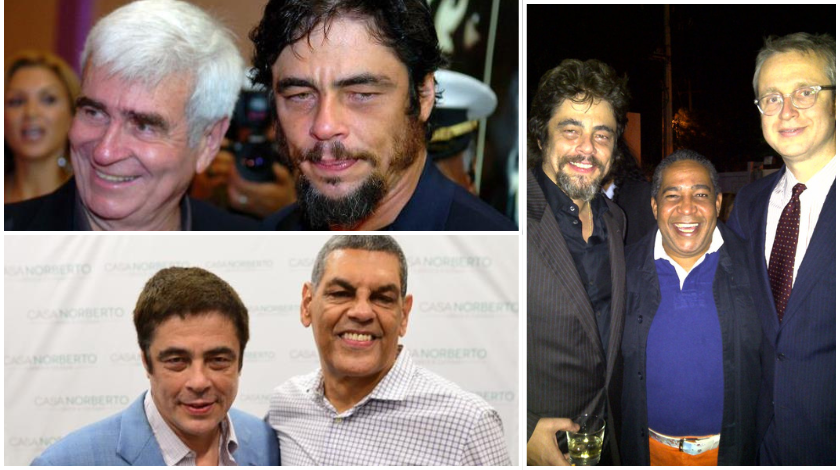
Is Guillermo del Toro related to Benicio del Toro? No, they are not related despite sharing the same surname. Guillermo del Toro is a Mexican filmmaker born in Guadalajara, while Benicio del Toro is a Puerto Rican actor. Interestingly, Benicio has a brother, Gustavo, who works as a doctor in New York.
What influenced Guillermo del Toro’s work? His major influences include George Romero’s zombie films, Universal monster movies from the 1930s, Spanish filmmaker Luis Buñuel, horror comics like Tales from the Crypt, and his own strict Catholic upbringing in Mexico. He was also deeply influenced by his grandmother’s religious devotion and his mother’s encouragement of his creative interests.
What is Guillermo del Toro working on now? As of 2025, del Toro is developing multiple projects, including a live-action adaptation of Frankenstein, various animated features through his new stop-motion studio-lab with Netflix and Gobelins Paris, and producing films for other directors through his company Double Dare You Productions.