Who Owns Instagram? The Surprising History of Meta’s Ownership
If you have spent any time scrolling through your phone today, you may have opened Instagram. Whether you were looking at a friend’s vacation photos, watching a quick Reel, or checking out the latest meme, Instagram has become a central part of our daily digital lives. However, many people who use the app every single day are still confused about who actually calls the shots behind the scenes. You might see the “from Meta” logo when the app loads, but what does that really mean? In this deep dive, we are going to explore exactly who owns Instagram, how it changed hands, and why that matters for the billions of people who use it.
The Clear Answer: Meta Platforms, Inc.
To put it simply, Instagram is owned by Meta Platforms, Inc. You probably know this company better by its original name, Facebook. In late 2021, the company decided to change its corporate name to Meta to signal that it was looking toward the future, specifically toward something it calls the “Metaverse.” While the app on your phone is still called Instagram, the legal entity that owns the servers, the code, and your data is Meta.
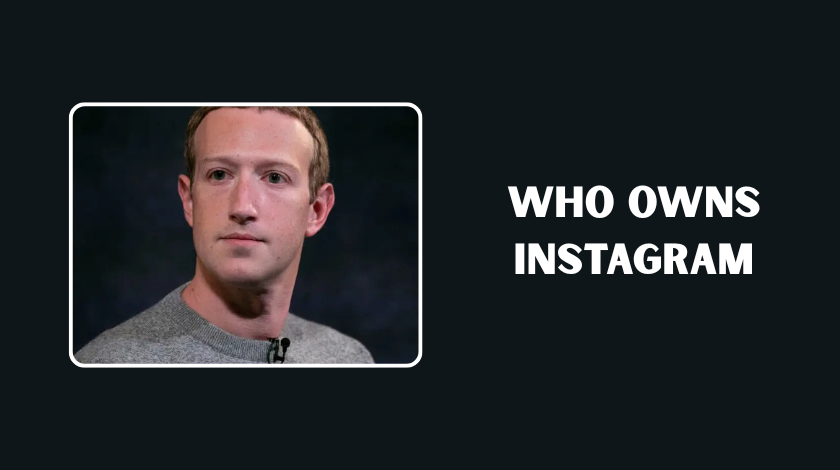
Mark Zuckerberg is the Chairman and CEO of Meta. While he does not “own” Instagram in the way a person owns a car, he wields significant power over the company. Because of the way the company’s stock is set up, Zuckerberg has a majority of the voting power. This means that if there is a major decision about Instagram, his voice is usually the one that matters most. Meta also owns other massive platforms, including WhatsApp, Messenger, and the newer text-based app Threads. When you look at it that way, Instagram is just one very important piece of a much larger social media puzzle.
The Humble Beginnings: Kevin Systrom and Mike Krieger
It is hard to believe it now, but Instagram was once a tiny startup with only thirteen employees. It was founded by two friends, Kevin Systrom and Mike Krieger. They were both graduates of Stanford University and had a passion for photography and coding. Interestingly, the app was not even called Instagram at first. It started as an app called Burbn, which was actually quite complicated and allowed people to check into locations and post photos.
After realizing that the photo-sharing aspect of Burbn was what people loved most, they stripped away everything else and launched Instagram in October 2010. I remember when I first downloaded it; it felt so different from everything else because of those vintage-style filters. It turned average phone photos into something that looked like professional art. The app was an instant hit, gaining millions of users in just a few months. For the first two years, Systrom and Krieger were the company’s true owners and leaders, and they operated out of a small office in San Francisco.
The 2012 Acquisition That Changed Everything
In April 2012, something happened that sent shockwaves through the tech world. Mark Zuckerberg announced that Facebook was buying Instagram for $1 billion. At the time, this was a mind-blowing amount of money for a company that had no revenue and a very small staff. Many financial experts thought Zuckerberg was making a huge mistake. They could not understand why he would pay a billion dollars for a “photo filter app.”
Looking back, it is clear this was one of the smartest business moves in history. At that time, Facebook was struggling to move from desktop computers to mobile phones. Instagram was already mobile-first and was growing faster than Facebook itself. By buying Instagram, Zuckerberg was not just buying an app; he was buying his biggest competitor and ensuring that Facebook would remain the king of social media for the next decade. The deal was finalized just as Instagram was becoming a household name.
Why Did the Founders Eventually Leave?
For a few years after the buyout, things were going well. Zuckerberg had promised Systrom and Krieger that Instagram would remain an independent company within Facebook. For a long time, they were allowed to keep their own office and their own unique culture. However, as Instagram grew and became more important to Facebook’s bottom line, the “independence” started to fade.
In 2018, both Kevin Systrom and Mike Krieger suddenly resigned from the company. While they were polite in their public statements, it was widely reported that there was significant tension between them and Mark Zuckerberg. Reports suggested that the founders were unhappy with how much Facebook was trying to integrate Instagram’s data and features into the main Facebook app. They wanted to keep Instagram simple, while Facebook wanted to push more ads and more features to increase profit. When the founders left, it marked the end of an era. Instagram was no longer a “partner” of Facebook; it was fully a part of the Facebook machine.
Who Truly Controls Meta Today?
Since Instagram is part of a public company, Meta Platforms, Inc., it is technically owned by thousands of different people and organizations who own “shares” or “stock” in the company. If you own a single share of Meta stock, you are technically a tiny part-owner of Instagram. Large investment firms like Vanguard and BlackRock own large stakes in the company on behalf of their clients.
However, there is a catch. Meta has a “dual-class” stock structure. This means there are two types of shares. Class A shares are what regular people can buy on the stock market, and they give you one vote per share. Class B shares are held by Mark Zuckerberg and a few other insiders, and they give ten votes per share. Because of this, even though Zuckerberg does not own 50 percent of the company’s money, he owns more than 50 percent of the voting power. This gives him “de facto” control over Instagram. He cannot be easily fired, and he can make the final call on major strategy changes.
The Move to the Metaverse and Beyond
In 2021, when Facebook rebranded to Meta, the ownership structure did not change, but the focus did. The company wanted to move away from just being a “social media company” and become a “metaverse company.” They began pouring billions of dollars into virtual reality and augmented reality.
On Instagram, this meant many changes. We started seeing more features that connected Instagram to other Meta products. For example, your Instagram messages can now be linked with your Facebook Messenger. You can also share your Instagram Stories directly to your Facebook profile with one click. This integration is a key part of Meta’s strategy. They want to make it so that even if you stop using the Facebook app, you are still part of their “ecosystem” through Instagram or WhatsApp. From a business perspective, this makes the company incredibly stable. Still, from a user perspective, it has raised some concerns about privacy and data collection.
Why Ownership Matters for the Average User
You might be wondering, “Why should I care who owns the app?” The answer lies in how your data is handled and how the app evolves. When Instagram was independent, it had a very specific focus on photography. Under Meta’s ownership, the goal has shifted toward keeping you on the app for as long as possible so they can show you more advertisements.
This ownership is why we see so many “suggested posts” from people we don’t follow, and why the app has leaned so heavily into video (Reels) to compete with TikTok. Meta is a massive corporation that has to answer to shareholders and grow its profits every single year. This pressure often dictates the features you see on your screen. Furthermore, because Meta owns multiple apps, they can build a very detailed profile of who you are, what you like, and where you go by combining data from Instagram, Facebook, and your web browsing habits.
My Perspective on the Future of Instagram
Having watched the tech industry for years, I find the story of Instagram’s ownership fascinating. If Instagram had stayed independent, would it have survived the rise of TikTok? It is hard to say. Meta’s massive resources allowed Instagram to build “Stories” to beat Snapchat and “Reels” to compete with TikTok. Without Meta’s money and engineering power, Instagram might have become a ghost town like MySpace or Friendster.
On the other hand, something was definitely lost when the founders left. There was a certain “soul” and simplicity to Instagram that has been replaced by a very loud, busy, and ad-heavy experience. Looking ahead, Instagram’s ownership is likely to face more legal challenges. Governments around the world are looking at whether Meta is “too big” and whether it should be forced to sell Instagram to make the market more competitive. While I don’t think that will happen anytime soon, it could change the app forever.
Conclusion
In summary, Instagram is owned by Meta Platforms, Inc., the same company that owns Facebook and WhatsApp. While Kevin Systrom and Mike Krieger started it as a simple photo-sharing app, it was bought by Mark Zuckerberg in 2012 for $1 billion. Today, it is a cornerstone of a multi-billion-dollar empire. Zuckerberg maintains ultimate control over the platform through his special voting shares, ensuring that Instagram remains aligned with Meta’s broader goals. Whether you love the current version of the app or miss the old days, there is no denying that its ownership has shaped it into the global powerhouse it is today.
Frequently Asked Questions (FAQ)
1. Does Mark Zuckerberg personally own Instagram?
No, he does not own it personally. Meta Platforms, Inc. is a public company that owns Instagram. However, Mark Zuckerberg is Meta’s majority shareholder, giving him the power to control Instagram.
2. How much did Facebook pay for Instagram?
Facebook purchased Instagram in 2012 for approximately $1 billion in a mix of cash and stock. At the time, it was considered a very high price, but today, Instagram is estimated to be worth over $100 billion.
3. Are the founders of Instagram still involved?
No. Kevin Systrom and Mike Krieger left the company in September 2018. They reportedly left due to disagreements with Mark Zuckerberg over the app’s direction and autonomy.
4. Is Instagram a separate company from Facebook?
Technically, no. It is a subsidiary or a “brand” under the Meta Platforms umbrella. It does not have its own board of directors or separate stock that you can buy.
5. Does Meta own my photos on Instagram?
According to the Terms of Service, you own the content you post. However, by using the app, you give Meta a “non-exclusive, fully paid and royalty-free, transferable, sub-licensable, worldwide license” to use your content. This means they can show it to others and use it to run the service.