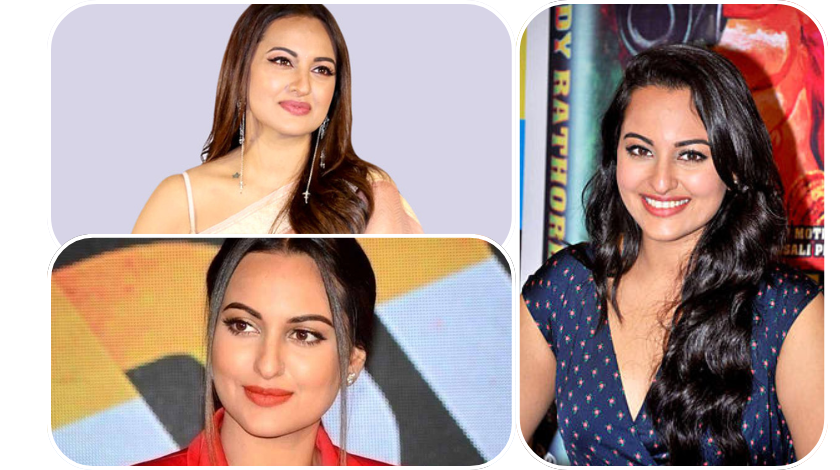
Sonakshi kapoor: From Dabangg Debut to Heeramandi Glory – The Untold Story of Bollywood’s Most Resilient Star
There are moments in Bollywood when everything clicks perfectly for an actor. For Sonakshi Sinha, that moment came twice in her life – first when she stepped onto the screen as Rajjo in Dabangg back in 2010, and then fourteen years later when she transformed into the complex, scheming Fareedan in Sanjay Leela Bhansali’s Heeramandi. Sandwiched between these two peaks was a journey that most people in the film industry would have given up on. But Sonakshi isn’t most people. She is, as her father Shatrughan Sinha’s nickname suggests, a true “Shotgun” – loud, unmissable, and impossible to ignore.
I have been following Sonakshi’s career since that very first Dabangg trailer dropped, and honestly, watching her evolution has felt like watching a close friend grow up. From the shy, slightly awkward debutante who could barely promote her own films, to the confident woman who now speaks her mind about body positivity, veganism, and the importance of mental health in the film industry – this transformation didn’t happen overnight. It took fifteen years, numerous box office disappointments, unfair comparisons to her father’s co-star Reena Roy, and a complete industry shift from theatrical releases to streaming platforms. Through it all, Sonakshi Sinha did what she does best – she adapted, she survived, and eventually, she thrived.
The Sinha Legacy: Born Into Bollywood Royalty But Choosing Her Own Path
Born on June 2, 1987, in Mumbai, Sonakshi grew up in a household where film posters were more common than wallpaper. Her father, Shatrughan Sinha, was one of the most distinctive voices and personalities of 1970s and 80s Hindi cinema – that famous “Khamosh!” catchphrase still echoes in my head whenever I think of him. Her mother, Poonam Sinha, was also an actress before marriage. With twin brothers Luv and Kush (yes, named after the Ramayana characters, because the Sinhas are deeply traditional that way), Sonakshi was the baby of the family, the one everyone thought would stay away from the limelight.
And for a while, she did. While most star kids start dreaming of their debut in their teenage years, Sonakshi actually studied fashion design at SNDT Women’s University. This wasn’t a backup plan – this was her actual plan. She worked as a costume designer on independent films, including one called Mera Dil Leke Dekho in 2005. I find this detail fascinating because it tells you something important about her personality. She wasn’t desperate for fame. She wanted to understand cinema from the ground up, to know what happens behind the camera before she ever stepped in front of it.
Growing up in Mumbai’s film culture meant she knew the industry’s dark sides too – the nepotism debates, the constant scrutiny of women’s bodies, the fickleness of success. Maybe that’s why she waited until she was 23 to make her debut, practically ancient by Bollywood standards, where actresses often start at 18 or 19. Or maybe, and this is just my theory, she was waiting until she felt ready in her own skin. Because what happened before Dabangg wasn’t just about getting a film offer. It was about a physical transformation that would define conversations around her for the next decade.
The 30-Kilo Transformation: When Health Became Headlines
Before we talk about the weight loss, let’s be clear about something – Sonakshi Sinha was never “unhealthy” before Dabangg. She was a regular young woman with a regular body type, the kind you see in college campuses across India every single day. But the film industry in 2010 had very specific ideas about how heroines should look, and Sonakshi didn’t fit that mold. So she did something remarkable – she lost 30 kilograms through diet and exercise, not through any shortcuts or surgeries that are so common today.
I’ve read interviews where she talks about this period, and what strikes me is how honest she is about the struggle. She wasn’t one of those celebrities who pretends the weight just “melted off” because of good genes. She worked for it. She gave up her favorite foods. She trained regularly. And when she emerged for her Dabangg audition, Salman Khan – who had known her since childhood because of his friendship with her father – saw something special. He saw Rajjo, the village girl with dignity and strength, and he knew Sonakshi was perfect for it.
What happened next was cinematic history. Dabangg, released in September 2010, became one of the year’s biggest hits. Sonakshi didn’t just debut; she debuted with a Filmfare Award for Best Female Debut. But here’s the thing that people often miss – her “girl next door” look, which was so different from the size-zero trend dominating Bollywood at that time, actually worked in her favor. Indian audiences saw themselves in her. She looked like their sister, their neighbor, their daughter. In a sea of imported beauty standards, Sonakshi Sinha looked like India.
The Commercial Queen Years: Riding the Action Film Wave
From 2010 to 2014, Sonakshi Sinha was everywhere. And I mean everywhere. If you went to a single-screen theater in small-town India during this period, chances were high that you’d see her face on the poster. Rowdy Rathore with Akshay Kumar in 2012. Son of Sardaar with Ajay Devgn, the same year. Dabangg 2 at the end of 2012. Then Holiday: A Soldier Is Never Off Duty in 2014. These weren’t just hits; they were 100-crore club blockbusters, the kind of films that defined commercial Hindi cinema.
I remember watching these movies in packed theaters, and the reaction to Sonakshi was always interesting. She wasn’t doing the traditional “heroine” things – she wasn’t just looking pretty in songs or playing the damsel in distress. In Rowdy Rathore, she had comic timing that held its own against Akshay Kumar’s energy. In Holiday, she played a boxer, for goodness sake. She was creating a new niche – the action-film heroine who could stand shoulder to shoulder with the biggest male stars without being overshadowed.
But the film that proved she was more than just a commercial prop came in 2013 – Lootera. Directed by Vikramaditya Motwane and starring Ranveer Singh, this was a period romance based on O. Henry’s The Last Leaf. Sonakshi played Pakhi, a young woman suffering from tuberculosis, in a performance that was so quiet, so internal, so devastatingly beautiful that it earned her a Filmfare nomination for Best Actress. I watched Lootera in a nearly empty theater during its second week, and I remember thinking – this is the real Sonakshi Sinha. This is what she can do when given material that respects her intelligence.
The tragedy of Lootera was that it didn’t turn a profit. It was a critical success but a commercial failure. And in Bollywood, as Sonakshi would learn over the next few years, commercial failure is the only kind of failure that matters.
The Dark Years: When Box Office Turned Cold and Critics Got Louder
If I had to pinpoint when Sonakshi’s “downfall” narrative began, it would be 2015. Tevar, starring Arjun Kapoor, came and went without making a splash. Then 2016 happened – Akira and Force 2 did decent business but weren’t the blockbusters she was used to. 2017 brought Noor, where she played a journalist, and Ittefaq, a mystery thriller. Both were interesting choices, but both underperformed.
By 2018, the narrative had shifted completely. Welcome to New York was panned by critics. Happy Phirr Bhag Jayegi barely registered. The same media that had called her the “next big thing” in 2012 was now writing articles about her “career slump.” I remember reading particularly nasty pieces about her weight gain (because she had gained some weight back after her initial loss), about her “limited acting range,” and about how she was finished as a leading lady.
What made this period worse was the rise of social media, which gave everyone a platform to say horrible things directly to celebrities. Sonakshi has spoken about receiving death threats and rape threats during this time, simply for being a public figure. The body shaming was relentless – every photo, every appearance, every outfit was scrutinized and mocked. Looking back at interviews from 2019, I can see the strain in her eyes. She was trying to stay positive, trying to keep working, but the joy was gone.
Mission Mangal in 2019 gave her a brief respite – the multi-starrer with Akshay Kumar was a hit, and she was part of an ensemble of strong women, including Vidya Balan and Taapsee Pannu. But Dabangg 3, the same year, while financially successful, felt like a step backward. She was playing Rajjo again, but the spark was different. The industry had moved on to younger faces, to new star kids, to different kinds of stories. At 32, Sonakshi Sinha was being treated like she was over the hill.
The lowest point came in 2022 with Double XL, a film about plus-size women that ironically faced criticism for not being authentic enough. It flopped badly. At this point, any reasonable person would have quit. But Sonakshi Sinha is not reasonable – she is stubborn, and thank god for that.
The Digital Renaissance: How Streaming Platforms Wrote Her Second Act
2023 changed everything. When Sonakshi signed on for Dahaad, an Amazon Prime Video series created by Zoya Akhtar and Reema Kagti, nobody expected it to become the phenomenon it did. Playing Anjali Bhaati, a small-town police officer investigating a series of murders, Sonakshi didn’t just act – she inhabited. The role required her to be tough yet vulnerable, funny yet serious, ordinary yet extraordinary. She won the Filmfare OTT Award for Best Actress–Critics in Drama Series, and suddenly the conversation changed.
I binge-watched Dahaad over the weekend, and I was stunned. This was the same actress who had been written off as “wooden” and “expressionless” by trolls on Twitter? The nuance she brought to Anjali – the way she walked, the way she spoke Hindi with that authentic Rajasthani accent, the way she held her frustration when her male colleagues dismissed her – it was masterclass acting. More importantly, it was acting that didn’t need to fit into the 2-hour Bollywood formula. The long format of web series gave her room to breathe, to build a character slowly, to show a range that commercial films never allowed.
Then came 2024, and with it, Heeramandi. Sanjay Leela Bhansali’s magnum opus about courtesans in pre-independence Lahore was always going to be controversial, always going to be talked about. But nobody expected Sonakshi Sinha to walk away with the best reviews in an ensemble that included Manisha Koirala, Aditi Rao Hydari, and Richa Chadha. Playing Fareedan – a complex, morally gray character with a traumatic past – she brought a maturity that wasn’t there in her earlier work.
The dual role (she also played Fareedan’s mother, Rehana, in flashbacks) demonstrated her technical growth as an actress. The two characters had different body language, speech patterns, and energy. When critics called her performance “brilliant” and “mature,” they weren’t being kind – they were being accurate. At 37, Sonakshi Sinha had finally become the actress she was always meant to be.
Love in the Time of Streaming: Why 2024 Was Her Best Year Yet
While her professional life was hitting new peaks, Sonakshi’s personal life was also transforming. On June 23, 2024, she married Zaheer Iqbal in a private ceremony that surprised many people – not because of the wedding itself, but because of how beautifully she managed to keep it intimate despite being one of India’s most recognizable faces.
The wedding was notable for being an interfaith marriage (Zaheer is Muslim, Sonakshi is Hindu), which sparked unnecessary controversy in some conservative circles. But Sonakshi handled it with the grace we’ve come to expect from her. In interviews after the wedding, she spoke about celebrating her first Diwali with Zaheer, about how he takes her back to his childhood building every year to celebrate with old friends, and about the joy of building a life together.
What I found most telling was how she balanced this personal milestone with her professional commitments. Heeramandi was released just before her wedding, and she promoted it while planning her marriage. Then she went straight to promoting Kakuda, a horror-comedy in which she again played dual roles. The work didn’t stop, but now a partner was sharing the load. In a recent interview with Times of India, she reflected on 2024 being “way better than what I expected” – and you can see that happiness in her recent public appearances. She smiles differently now. There’s a contentment that wasn’t there before.
Beyond the Screen: The Entrepreneur and Activist
If Sonakshi’s acting career shows her resilience, her off-screen ventures show her range. In 2022, she launched SOEZI, a press-on nail brand that has become surprisingly successful. This isn’t a celebrity vanity project – she actually understands the beauty market, draws on her fashion design background, and has created products that solve real problems for working women who want nice nails without spending hours at salons.
Then there’s her activism. Sonakshi has been vocal about animal rights for years, but in 2022, she went fully vegan and became the face of PETA India’s campaigns. She’s also been refreshingly honest about mental health, about the pressures of body image, and about the toxicity of social media. Unlike many celebrities who pretend their lives are perfect, Sonakshi admits to struggling, to having bad days, to needing therapy.
Her singing career, while not as prominent as her acting, shows another creative outlet. “Aaj Mood Ishqholic Hai” from 2015 was a catchy party number, and she’s lent her voice to several film songs since then. Is she a professional singer? No. But does she enjoy it? Clearly, and in an industry that typecasts actors so rigidly, her willingness to try different things – singing, designing, entrepreneurship – is genuinely inspiring.
What’s Next for Sonakshi Sinha in 2025?
As I write this in early 2025, Sonakshi is at an interesting crossroads. She has two major releases lined up: Nikita Roy and the Book of Darkness, which is particularly special because it marks her brother Kussh Sinha’s directorial debut, and Jatadhara, a bilingual film that seems to be in the supernatural thriller space.
The question is: will she return to big theatrical releases full-time, or will she continue balancing films and OTT? Based on her recent interviews, she’ll do both. She has found a sweet spot where she can do the occasional commercial film (like the cameo in Bade Miyan Chote Miyan in 2024) while focusing on meatier roles in streaming content. The freedom that platforms like Netflix and Amazon Prime offer – the ability to play flawed women, to age on screen, to not always look glamorous – has clearly liberated her as an artist.
At 37, Sonakshi Sinha is finally getting the respect she deserves, not as Shatrughan Sinha’s daughter, not as the Dabangg girl, not as some weight-loss inspiration story – but as Sonakshi Sinha, actress. And honestly, watching this second act unfold has been one of the most satisfying things for anyone who loves Indian cinema.
Conclusion: The Actress Who Refused to Be Written Off
Sonakshi Sinha’s fifteen-year journey in Bollywood is a masterclass in resilience. She debuted at the top, survived a brutal mid-career slump that would have destroyed lesser personalities, and emerged in her late thirties as one of the most respected actresses in the digital space. Her story isn’t just about weight loss or wedding photos or award wins – it’s about refusing to let an industry that discards women after 30 define her worth.
From Rajjo to Fareedan, from Dabangg to Heeramandi, she has traveled farther than a few Bollywood actresses do. And the beautiful thing is, she is just getting started. In a 2024 interview, she said she was looking forward to “doing better things next year.” Based on everything we’ve seen, I believe her. Sonakshi Sinha has earned that trust.
Frequently Asked Questions (FAQ)
Is Sonakshi Sinha related to the Kapoor family? No, despite the confusion with her last name, Sonakshi Sinha is not related to the Kapoor family (like Kareena Kapoor or Ranbir Kapoor). She is the daughter of Shatrughan Sinha and Poonam Sinha. The Sinha family is originally from Patna, Bihar, and belongs to the Kayastha community.
How much weight did Sonakshi Sinha lose before her debut? Sonakshi Sinha lost approximately 30 kilograms (66 pounds) before her Bollywood debut in Dabangg (2010). She achieved this through diet and exercise over time, not through surgery. She has been open about this journey and has also spoken about gaining some weight back later in her career, advocating for body positivity.
What is considered Sonakshi Sinha’s best performance? While opinions vary, critics widely consider her role as Pakhi in Lootera (2013) to be her finest film performance, earning her a Filmfare Best Actress nomination. However, her recent work in the web series Dahaad (2023) and Heeramandi (2024) has received even higher acclaim, with many calling her Heeramandi performance her career-best.
When did Sonakshi Sinha get married? Sonakshi Sinha married actor Zaheer Iqbal on June 23, 2024, in a private ceremony at her family home in Mumbai. The wedding was an intimate affair attended by close family and friends, followed by a reception. The couple had been rumored to be dating since around 2020.
What is Sonakshi Sinha’s net worth? As of 2024-2025, Sonakshi Sinha’s estimated net worth is approximately $10 million (around ₹83 crores). This comes from her acting fees, brand endorsements (including Dabur and Chik Shampoo), and various business ventures. She has consistently appeared in Forbes India’s Celebrity 100 list from 2012 to 2017 and in 2019.