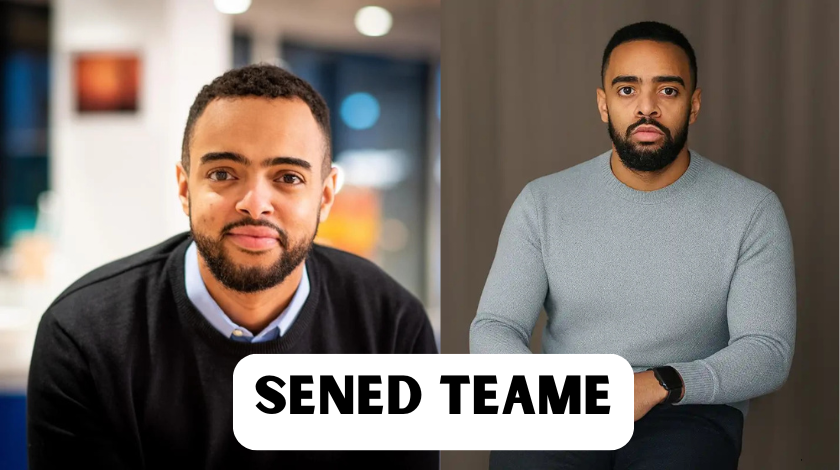
Sened Teame: The Private CFO Behind Football Star Alexander Isak’s Family Success
There is something genuinely fascinating about people who choose quiet competence over loud recognition, especially when they are connected to global celebrities. In a world where everyone seems to be chasing followers, likes, and viral moments, meeting someone who deliberately steps away from the spotlight feels almost refreshing. That is exactly the story of Sened Teame, a name you might not recognize immediately, but one that carries significant weight in two very different worlds. He is the older brother of Alexander Isak, the Swedish football sensation who recently made headlines with his record-breaking transfer to Liverpool FC, and simultaneously, he is a respected Chief Financial Officer leading major consulting operations across Scandinavia.
Most people searching for information about Sened Teame arrive here after seeing his name in articles about his younger brother’s incredible football journey. Perhaps you are curious about the family behind one of Europe’s most expensive strikers, or maybe you came across his professional profile while researching Nordic finance leaders. Either way, what you will discover is a man who has built something remarkable on his own terms, without borrowing fame from his sibling’s success on the pitch. His story offers valuable lessons about identity, professional excellence, and the courage to define success on one’s own terms rather than publicly.
From War-Torn Eritrea to Solna’s Suburbs: A Family’s Courageous Beginning
To truly understand Sened Teame, you need to start with the remarkable journey of his parents, because their story shaped everything that followed. During the 1980s, Eritrea was locked in a brutal civil war, a conflict that made daily life dangerous and prospects uncertain for millions of families. Sened’s father, Teame, and his mother made the painful decision to leave everything behind, their home, their community, their entire history, to seek safety and opportunity in a country they had never seen. They arrived in Sweden as refugees, carrying little more than hope and determination to build something better for the children they would eventually raise.
Sened was born into this context of sacrifice and renewal, though the exact year of his birth remains private, a fitting reflection of his character. What we do know is that the family settled in Solna, a municipality just north of Stockholm that has become known for its multicultural communities and excellent sporting facilities. Growing up there meant that Sened experienced a childhood that blended Eritrean heritage with Swedish culture, sometimes in complex ways but ultimately enriching. His parents worked hard to maintain connections to their homeland, teaching their children about Eritrean traditions, food, and values while simultaneously helping them integrate into Swedish society. This dual identity would later become a defining feature of both Sened and Alexander’s public personas.
The Teame household was built on principles that transcend cultural boundaries: hard work, education, humility, and family loyalty. While other immigrant families might have struggled to balance old and new, Sened’s parents created an environment where both could coexist. Dinner tables featured injera and traditional Eritrean dishes alongside Swedish favorites. Conversations happened in Tigrinya at home while the children mastered Swedish at school. This foundation gave Sened a sense of rootedness that many people spend their whole lives searching for, and it would prove essential when his younger brother began attracting international attention.
Building a Finance Career: From Stockholm University to Boardrooms
While Alexander was discovering his talent for football in the local parks of Solna, Sened was taking a completely different path that would lead him to corporate leadership. After completing his secondary education with strong grades, he enrolled at Stockholm University, one of Scandinavia’s most respected institutions. There, he focused on business administration and finance, subjects that matched his natural aptitude for numbers and strategic thinking. Unlike the dramatic highs and lows of professional sports, Sened was drawn to the steady, predictable world of corporate finance where success is measured in quarterly reports, sustainable growth, and team leadership.
His early career included valuable experience at Ernst & Young, the global professional services firm, where he developed expertise in auditing, financial analysis, and business consulting. These formative years taught him how large organizations function, how to identify financial risks, and how to communicate complex information clearly. Colleagues from this period remember him as thorough, calm under pressure, and unusually mature for his age. He was not the type to seek attention in meetings or claim credit for team achievements, but rather someone who ensured that the work got done correctly and ethically.
By January 2020, Sened had earned enough trust and demonstrated sufficient capability to be appointed Chief Financial Officer at Cloud Nine AB, a significant step in his professional journey. In this role, he was responsible for financial strategy, investor relations, and operational budgeting across the company’s portfolio. The position required not just technical accounting skills but also leadership vision, the ability to see around corners and anticipate market changes before they affected the bottom line. He held this position for five years, guiding the company through the economic uncertainties of the pandemic era and emerging with a reputation for steady, reliable management.
In January 2025, Sened took on an even more prominent role as CFO of Sweden at NOVA Consulting Group, a multi-company consulting organization with operations across Norway, Poland, and Sweden. The official leadership page of NOVA Consulting confirms his position, listing him alongside other C-suite executives in their Stockholm office at Stadsgården 6. In this capacity, he oversees financial operations for the Swedish division, working with teams in Oslo and Kraków to ensure consistent reporting standards and strategic alignment. It is demanding work that requires constant attention to regulatory changes, market conditions, and internal performance metrics, but those who know him say he thrives on the complexity.
What makes his professional trajectory particularly impressive is that he achieved all of this without trading on his family name. In the business world, being associated with a famous athlete can open doors, secure meetings, and create networking opportunities. Sened never used that leverage. His LinkedIn profile, which lists over 500 professional connections in the Greater Stockholm area, focuses entirely on his qualifications, experience, and educational background. This choice speaks volumes about his character and his belief that professional respect must be earned through competence, not borrowed from celebrity connections.
The Bond Between Brothers: Supporting Stardom from the Shadows
The relationship between Sened and Alexander Isak represents one of the most interesting dynamics in modern sports families. While Alexander has become one of the most recognizable faces in European football, with transfer fees reaching £125 million and social media following in the millions, Sened has remained deliberately invisible. Yet those close to the family insist that his influence on Alexander’s development has been profound and continuous, even if it happens away from cameras and interviews.
Growing up in Solna, Sened was the older brother who attended Alexander’s earliest matches at AIK’s youth academy, the one who helped him practice techniques in their backyard, and the first to recognize that the kid had something special. When Alexander made his professional debut at sixteen, becoming the youngest player to score for the Swedish national team shortly after, Sened was there in the stands, celebrating quietly without seeking recognition. As Alexander’s career took him from Borussia Dortmund in Germany to Real Sociedad in Spain, then to Newcastle United in England, and finally to Liverpool in a record-breaking deal, Sened remained a stabilizing force.
The nature of their relationship reveals something important about both men. Alexander has spoken in rare interviews about the importance of family and how his Eritrean roots keep him grounded despite the insane pressures of modern football. Sened embodies that grounding influence. While agents, managers, and media handlers swirl around a top player, creating a bubble of artificial importance, Sened represents the reality of their shared childhood, the memory of their parents working multiple jobs, the understanding that football is a profession, not an identity.
Sened attends important matches when his schedule allows, but he does not sit in VIP boxes or participate in post-game celebrations. He prefers to watch from regular seats, often leaving before the final whistle to avoid the crowds, and he never gives interviews about his brother’s performance. This restraint is remarkable in an era where even distant relatives of celebrities often start podcasts or social media accounts to capitalize on family fame. Sened’s choice reflects a deep respect for Alexander’s autonomy and a personal value system that prioritizes genuine connection over public performance.
Their parents, Teame and his wife, have maintained similar privacy, though they occasionally appear in background shots during Alexander’s visits to Eritrea. The entire family seems to have agreed on a collective approach to fame: Alexander carries the public burden because his profession requires it, while everyone else supports from a distance. It is a strategy that has preserved their family dynamics in ways that many celebrity families have failed to maintain.
The Philosophy of Privacy: Why Some Success Stays Hidden
Perhaps the most compelling aspect of Sened Teame’s story is his deliberate choice to remain unknown. In 2025, this decision runs counter to almost every cultural pressure we face. Social media platforms are designed to make sharing irresistible. Professional networking sites reward visibility with opportunities. Even traditional media operates on the assumption that public interest justifies intrusion into private lives. Against this tide, Sened has built a genuinely private life, and understanding why offers insights that extend far beyond his personal circumstances.
From what can be gathered through professional contacts and rare public records, Sened believes that privacy is not about hiding but about protecting what matters most. When your brother is one of the most talked-about athletes in the world, every family gathering, every holiday photo, every casual comment can become content for public consumption. By removing himself from that ecosystem entirely, he creates a space where Alexander can be a brother rather than a brand, where parents can be parents rather than supporting characters in a sports narrative, where conversations can remain unrecorded, and thoughts unshared.
This approach requires discipline. It means declining interview requests even when they seem harmless. It means avoiding social media platforms that most professionals use for networking. It means accepting that some people will speculate about your life, your income, and your relationships without any factual basis, and choosing not to correct the record. For Sened, this discipline appears to be rooted in his upbringing. His parents survived a war by keeping their heads down and focusing on survival. They built a new life in Sweden through quiet perseverance rather than public appeals for sympathy. These lessons about the value of discretion were passed down to their children.
The practical benefits of this privacy are substantial. Sened can move through Stockholm without being recognized. He can conduct business meetings where the conversation focuses on financial metrics rather than his brother’s latest goals. He can build relationships based on who he is rather than who he is related to. For someone in finance, where trust and confidentiality are paramount, this separation between personal and professional life is not just preferable but essential. Clients and colleagues need to know that their information is secure, that their CFO is not secretly sharing details with journalists or posting insights on social platforms.
There is also a psychological dimension to consider. Research on celebrity families consistently shows that siblings of famous people often struggle with identity formation, feeling simultaneously proud of their relative’s success and overshadowed by it. Some react by seeking their own fame, others by withdrawing completely, and many by developing complicated relationships with publicity. Sened seems to have found a middle path: he is professionally successful in his own right, which satisfies the need for personal achievement, while his privacy protects him from comparison to his brother’s very different kind of success. It is a solution that requires self-knowledge and the courage to ignore societal expectations about what a “successful” life should look like.
Lessons for Modern Professionals: Redefining Achievement on Your Own Terms
Sened Teame’s journey offers several valuable lessons for anyone navigating career and identity in the modern world. First, he demonstrates that professional excellence does not require public recognition. In an era of personal branding and influencer culture, it is easy to believe that success must be visible to be real. Sened’s career progression from university graduate to CFO of major consulting groups occurred largely out of public view, yet it is no less legitimate than achievements that generate headlines. For young professionals feeling pressure to build online personas, his example suggests that competence, reliability, and ethical behavior still matter more than follower counts.
Second, his story illustrates the importance of cultural continuity. Despite living in Sweden for his entire life and working in the distinctly Scandinavian business environment, Sened has maintained a connection to his Eritrean heritage. This is not performative; there are no social media posts about traditional food or heritage celebrations, but rather a genuine integration of his roots into who he is. For children of immigrants struggling to balance expectations from different cultures, this offers a model that does not require choosing between identities.
Third, Sened shows us that supporting others’ success can be fulfilling without being subordinate. His role in Alexander’s life is clearly important to both of them, yet he has never made his brother’s achievements about himself. He does not play the “influencer sibling” game of posting about famous family members to gain attention. Instead, he provides steady support from a position of independence. This is a sophisticated understanding of relationships that many people struggle to achieve: the ability to be connected without being dependent, supportive without being subservient.
Finally, his approach to privacy reminds us that boundaries are healthy. In a world that increasingly treats every aspect of life as potentially shareable content, the decision to keep some things private is becoming radical. Sened’s life suggests that this radical choice might also be a wise one. His mental health is not subject to public commentary. His professional reputation is not vulnerable to viral misinterpretation. His family relationships are not performed for audience approval. These protections, which he chose deliberately, create a foundation of stability that supports everything else he does.
Conclusion
Sened Teame represents a type of success that our current culture struggles to celebrate because it cannot be easily photographed, shared, or monetized. He is a finance executive who has risen to leadership through competence and character rather than connections or publicity. He is a family member who supports one of the world’s most famous athletes without capitalizing on that connection. He is a child of immigrants who has integrated multiple cultural identities into a coherent personal foundation. And he is a private individual who has demonstrated that choosing anonymity in an age of forced transparency is both possible and potentially protective.
His story matters not because he is Alexander Isak’s brother, but because he is Sened Teame: a professional who has defined success on his own terms, a family member who has maintained genuine relationships despite external pressures, and a person who has preserved his autonomy in environments that constantly demand its surrender. For anyone feeling overwhelmed by the pressure to be constantly visible, constantly connected, and constantly performing, his example offers a different path. It suggests that the quiet life, the private achievement, and the steady competence might actually be the more sustainable choice.
As Alexander continues his football career at Liverpool, breaking records and scoring goals that millions will watch, Sened will likely continue his work at NOVA Consulting Group, managing finances, leading teams, and building a legacy that does not require stadiums full of cheering fans. Both paths are valid. Both represent success. And both brothers, in their own ways, honor the sacrifices their parents made when they left Eritrea in search of a better life. That is the real Teame family story: not just one of athletic superstardom, but of two brothers who found their own ways to thrive.
Frequently Asked Questions
Who exactly is Sened Teame? Sened Teame is a Swedish finance professional of Eritrean descent who currently serves as CFO Sweden at NOVA Consulting Group. He is best known publicly as the older brother of Liverpool FC striker Alexander Isak. However, he has built his own successful career in corporate finance and maintains a very private lifestyle.
What does Sened Teame do for a living? He works as a Chief Financial Officer, currently leading financial operations for NOVA Consulting Group’s Swedish division. Previously, he served as CFO at Cloud Nine AB from 2020 to 2025, and gained early-career experience at Ernst & Young. His work involves financial strategy, regulatory compliance, and operational leadership across multiple countries.
How is Sened related to Alexander Isak? They are brothers, with Sened being the older sibling. They grew up together in Solna, Sweden, after their parents immigrated from Eritrea in the 1980s. They also have a sister named Semhar. Despite Alexander’s global fame, the brothers maintain a close but private relationship.
Why is there so little information about Sened Teame online? This is by deliberate choice. Sened has consistently avoided media attention, does not maintain public social media profiles, and does not give interviews about his personal life or his brother’s career. He believes that privacy protects his professional integrity and family relationships.
Where did Sened Teame study? He attended Stockholm University, where he completed his education in business administration and finance before entering the corporate sector.
Does Sened Teame attend Alexander Isak’s football matches? Yes, occasionally, but he prefers to attend quietly without seeking media attention or sitting in VIP areas. He supports his brother’s career privately rather than publicly.
