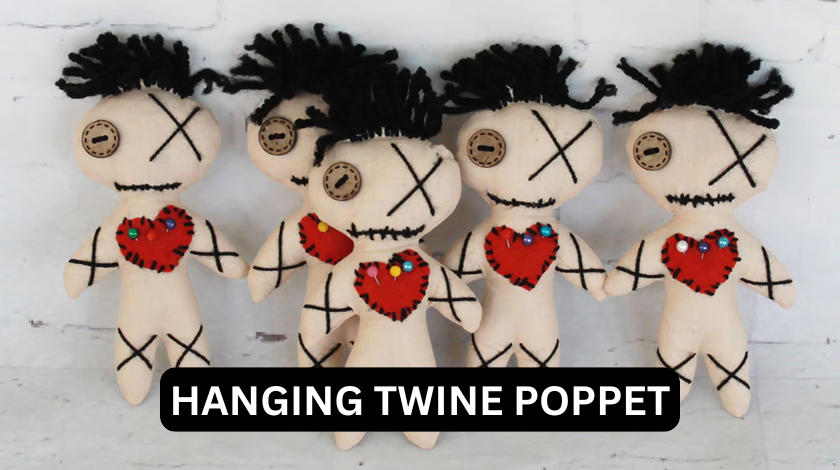
There is a specific kind of quiet magic that happens when you sit down at a wooden table with a ball of rough twine and a pair of scissors. You might feel a bit of a connection to the past, perhaps to a time when people did not have fancy stores to buy their spiritual tools. In those days, if you wanted to protect your home or bring a bit of extra luck to your family, you used what you had on hand. Often, that meant scraps of fabric, dried herbs from the garden, and plenty of twine. The hanging twine poppet is a beautiful example of this “low magic” or folk magic tradition. It is simple, humble, and incredibly powerful because it is made with your own two hands and your specific intent.
I remember the first time I decided to make one. I was living in a drafty old apartment that felt a bit “busy” with strange energy. I did not want anything complicated. I just wanted something to hang by the front door to act as a sort of spiritual filter. As I wound the jute twine around the little stick frame I had made, I realized that this process was almost like a meditation. Every knot I tied felt like I was locking in a wish for safety and peace. That is the heart of poppet magic. It is not about the scary things you see in movies. It is about creating a physical representation of a goal and giving it a place to live in your home.
Understanding the Poppet and Sympathetic Magic
Before we get into the “how-to” part, it is important to understand what a poppet actually is. The word “poppet” is an old version of the word “puppet,” and it basically refers to a small figure made to represent a person or an idea. This falls under the category of sympathetic magic. The core idea here is that “like produces like.” When you create a small doll to represent your home or yourself, and you treat that doll with care or charge it with protection, you are influencing the larger reality it represents. It is a way of focusing your brain and your energy on a specific outcome through a physical object.
Many people confuse poppets with the “Voodoo dolls” they see in horror films, but that is a major misconception. While many cultures around the world use effigies in their spiritual practices, the twine poppet we are talking about here is rooted in general folk magic. It is usually used for healing, protection, or attracting good vibes. When we make a hanging twine poppet, we are often making a “guardian” for a space. By hanging it up high, we are essentially saying that this little figure is watching over the threshold, keeping the bad stuff out and holding the good stuff in.
Selecting the Right Materials
When you are making a poppet, the materials you choose are just as important as the shape of the doll itself. I always tell people to stick with natural fibers. There is a very practical reason for this. Synthetic materials like polyester or nylon are made of plastic. In my experience, plastic feels “dead” or static. It does not hold onto energy or intent very well. Natural fibers like jute, hemp, sisal, or cotton were once living plants. They have their own earthy vibration that seems to soak up the intention you put into them, much like a sponge soaks up water.
Jute is my personal favorite for this specific project. It is scratchy, strong, and has a very rustic, ancient look. It smells like the earth, which helps ground you while you work. Hemp is another fantastic choice because it is incredibly durable and has a long history of being used in protective charms. You will also need a base. Some people use two small twigs tied in a cross shape to create a “skeleton,” while others simply fold the twine over itself many times to create a soft body. If you use twigs, try to find wood that has fallen naturally from a tree rather than cutting a fresh branch. Oak is great for strength, while rowan or willow is often used for protection and intuition.
The Crafting Process: Building the Body
To start your hanging twine poppet, you want to clear your workspace and your mind. I like to light a candle or just make sure the room is quiet. If you are using the twig method, tie two sticks together in a cross shape using a sturdy knot. This represents the arms and the spine. If you are using only twine, cut several lengths of string, maybe about twelve inches each. Fold them in half and tie a knot near the top of the loop to create a “head.” This loop is actually perfect for hanging the poppet later on.
Once you have your basic frame, you begin the wrapping. This is the most important part of the physical build. You take a long piece of twine and start wrapping it around the “shoulders” and down the “torso.” As you wrap, try to keep a specific thought in your mind. If this poppet is for protection, imagine a warm, golden light surrounding your house. If it is for health, think about the feeling of being strong and energized. Some people like to use “knot magic” here. Every time you have to tie off a piece of twine or start a new one, say a small phrase like, “With this knot, I seal this home’s safety.” It might feel a bit silly at first, but it really helps to lock your focus into the object.
The Power of the “Inside”
One of the best things about a twine poppet is that it is usually a bit hollow or has layers. This gives you the perfect opportunity to “stuff” the poppet with things that match your goal. This is often called a “taglock” or a “witness” in old folk magic traditions. If you are making this for yourself, you might include a tiny lock of your hair or a piece of paper with your name on it. This links the poppet directly to you. However, since we are focusing on a hanging poppet for the home, I usually prefer to use herbs.
I often tuck small sprigs of dried rosemary or pieces of bay leaf into the twine as I am wrapping the chest area. Rosemary is legendary for its protective qualities and its ability to clear away “mental fog.” If I want the home to feel more peaceful, I will use lavender buds. If I want to attract abundance, I might hide a shiny copper penny or a bit of dried cinnamon stick inside the twine layers. These little additions turn the poppet from a simple craft project into a concentrated bundle of symbolic energy. Because the twine is rough, it holds onto these small items very well without needing glue.
Why We Hang the Poppet
The “hanging” part of the hanging twine poppet is not just for decoration. In many folk traditions, the threshold of a home—the doors and the windows—is considered a thin place where energy moves in and out. By hanging your poppet above a door, you are placing a guardian at that entry point. It acts as a spiritual “sieve.” I have a poppet hanging over my back door that has been there for years. Whenever I come home after a long, stressful day, I look at that little twine figure and it reminds me to leave my work worries outside.
You can also hang them in windows to catch the sunlight or by your bed if you have been having bad dreams. The act of hanging it up also keeps it out of the way of pets or curious children, which is practical, but it also elevates the object. It moves it from being something that sits on a shelf to something that “watches” over the room. If you are hanging it for protection, make sure it is secure. You do not want your protector falling down the first time a breeze hits it!
Personalizing with Symbolism
Every poppet should be unique. There is no “perfect” way to make one because your intuition is your best guide. I once saw a poppet made by a friend who lived near the ocean; she had woven tiny seashells into the twine and used a bit of blue thread to wrap the waist. It was beautiful and perfectly reflected her environment and her soul. You can add bits of colorful embroidery floss to represent different things: red for passion and strength, green for growth, or white for purity and new beginnings.
Do not worry if your poppet looks a bit “messy” or “primitive.” In fact, I think the ones that look a bit rugged have more character. They look like they are ready to do some work. You are not making a doll for a toy store; you are making a tool for your life. If the arms are slightly uneven or the head is a bit lopsided, that is fine. It adds to the human element of the craft. The energy you put into the making is far more important than the visual perfection of the final product.
Ethical Considerations and Intent
When working with any kind of folk magic or symbolic crafting, it is important to check in with your intentions. Most people use hanging twine poppets for “white magic” or positive purposes like protection, peace, and prosperity. It is always best to focus on the “self” or the “home” rather than trying to influence other people without their permission. For example, instead of making a poppet to “make a neighbor be quiet,” it is often more effective to make a poppet to “bring peace and silence to my own sanctuary.” This keeps your practice focused on your own space and your own energy, which is much cleaner and more powerful in the long run.
Also, be mindful of the traditions you are drawing from. Twine poppets are a very general form of folk magic found in many European and Appalachian traditions. It is always a good idea to research the history of these crafts. This builds a deeper respect for the art and helps you feel more connected to the generations of people who did this before you. It turns a “DIY project” into a meaningful practice.
Caring for Your Poppet
Once your poppet is hanging, it does not need much work, but you should not completely forget about it. Over time, physical objects can collect dust, and in a spiritual sense, they can get “full.” If you feel like the energy in your home has become stagnant, you can take the poppet down and give it a little refresh. You can hold it in the smoke of some incense or just leave it out under the light of a full moon for a night to “recharge” it.
Eventually, there may come a time when the poppet has done its job. Maybe you are moving to a new house, or perhaps the protection it was meant to provide is no longer needed. When this happens, do not just throw it in the trash. Since it is made of natural fibers, the best way to dispose of it is to return it to the earth. You can bury it in the garden or, if it is safe to do so, burn it in a small fire. This releases the energy and the intention back into the universe in a respectful way. It completes the cycle that started when you first picked up that ball of twine.
Conclusion: The Simple Magic of Twine
In our modern, high-tech world, there is something incredibly rebellious and grounding about making a hanging twine poppet. It reminds us that we have the power to shape our environment and our inner lives using very simple tools. You do not need expensive crystals or complicated rituals to create a sense of peace and safety in your home. You just need some natural string, a bit of focus, and the willingness to work with your hands.
Whether you hang your poppet in a hidden corner or right in the middle of your living room, let it be a symbol of your own strength and your connection to the natural world. Every time you catch a glimpse of it swaying in the breeze, let it remind you of the intentions you set while making it. It is a small guardian, a rustic piece of art, and a testament to the fact that magic is often found in the most humble places.
Frequently Asked Questions (FAQ)
1. Does it matter what kind of twine I use?
Yes, it is highly recommended to use natural fibers like jute, hemp, or cotton. Natural fibers are believed to hold energy and intention better than synthetic materials like plastic or nylon. Plus, they look much more rustic and traditional.
2. Where is the best place to hang my poppet?
The most common place is above a main entrance or a window. This is because these areas are seen as “thresholds” where energy enters your home. Hanging it there allows the poppet to act as a guardian for the space.
3. Can I make a poppet for someone else?
Yes, you can make a poppet as a gift for protection or healing for a friend or family member. Just make sure your intentions are purely for their well-being. It is usually a good idea to tell them what it is so they can find a good place to hang it!
4. What if I am not “good” at crafting?
The beauty of a twine poppet is that it does not have to be perfect. The “primitive” or rough look is part of the charm. The most important part is the focus and intent you put into the knots and the wrapping, not the artistic symmetry.
5. How long does a twine poppet last?
A well-made twine poppet can last for many years if kept indoors. However, if you feel the energy of the doll has become “heavy” or if it starts to fall apart, it may be time to dispose of it respectfully and create a new one.