We have all been there. You just got home after a long, exhausting day at work, or perhaps you are at a beautiful picnic spot with a stunning sunset in front of you. You reach into the bag to grab that bottle of Cabernet or crisp Chardonnay you have been dreaming about, only to realize that the corkscrew is sitting squarely on your kitchen counter miles away. It is a moment of pure, unadulterated frustration. You have the prize, but you lack the key to the gate. However, I am here to tell you that you should not despair. Over the years, through various camping mishaps and poorly equipped hotel rooms, I have learned that a corkscrew is merely a convenience, not a necessity. Opening a bottle of wine is ultimately just a matter of physics and a bit of creative thinking.
In this guide, I am going to walk you through several tried and tested methods to get that cork out (or in) so you can finally enjoy your drink. We will talk about everything from using your own shoes to raiding your toolbox. Each method comes with its own set of risks and rewards, so please read carefully. My goal is to make sure you get to your wine without ending up in the emergency room with a hand full of glass shards. Let’s dive into the world of MacGyver-style wine opening.
The Hardware Store Method: Screw, Screwdriver, and Hammer
If you are at home and simply cannot find your wine opener, the most reliable and “professional” feeling alternative involves a trip to your junk drawer or toolbox. This is the method I personally swear by because it mimics the actual mechanics of a real corkscrew. You are going to need a long screw (the longer the better), a screwdriver, and a hammer with a “claw” on the back.
First, take the screw and manually start it into the center of the cork. Use the screwdriver to turn the screw down into the cork until there is about an inch or less sticking out. You do not want to go all the way through the cork, as that might cause pieces of cork to fall into the wine, but you need it deep enough to have a solid grip. Once the screw is firmly in place, take the claw end of your hammer. Slide it under the head of the screw just like you were pulling a nail out of a piece of wood. Now, instead of yanking upward with raw force, use the hammer as a lever. Gently pull back on the hammer handle. The leverage will slowly and smoothly lift the cork out of the bottle. It is satisfying, clean, and rarely fails. Just be careful not to put too much pressure on the glass neck of the bottle, as you could potentially snap it if you are too aggressive.
The Key Method: The “Angular” Approach
Perhaps you are not at home. Maybe you are in a park or a car. In this scenario, you probably do not have a hammer, but you almost certainly have a set of keys. This is one of the most popular “hacks” because it requires something everyone carries. However, it requires a bit of finesse and a sturdy key. Do not try this with a flimsy aluminum key or a modern car key with a heavy plastic fob, as you might break the key and end up unable to start your car.
Take your sturdiest house key and insert it into the edge of the cork at a 45-degree angle. You want to push the key in until most of it is buried in the cork. Now, here is the secret: do not just pull up. If you pull straight up, the key will just slice through the cork like a hot knife through butter. Instead, you need to use the key as a handle to rotate the cork. Start turning the cork in a circular motion while simultaneously pulling upward. The friction between the cork and the glass will slowly decrease as the cork begins to spin. With enough patience and a bit of wrist strength, the cork will eventually spiral its way out of the neck. It might take a minute or two, but it is a lifesaver when you have no other options.
The Shoe Method: Using Physics and a Wall
This is the method that looks the most ridiculous but is backed by genuine science. It is often called the “Wall Hack.” I remember the first time I saw someone do this at a party in college. I thought they were going to shatter the bottle and spray wine everywhere, but when it worked, it felt like magic. This method relies on something called the “water hammer” effect. When you hit the bottom of the bottle against a hard surface, the liquid inside moves forward and then snaps back, creating a pressure wave that pushes the cork out from the inside.
To do this safely, you need a shoe with a good rubber sole (like a sneaker or a sturdy dress shoe). Place the bottom of the wine bottle inside the heel of the shoe. This acts as a cushion to prevent the glass from shattering. Now, find a sturdy brick or concrete wall. Avoid drywall or wood, as you will likely leave a hole in your wall. Hold the bottle and the shoe together and firmly strike the heel of the shoe against the wall repeatedly. You do not need to use maximum force; a steady, firm rhythm is better. After a few hits, you will notice the cork starting to creep out. Once it is about halfway out, stop hitting the wall and pull the rest out by hand. If you keep hitting it until it pops out entirely, you will have a very messy fountain of wine on your hands.
The Kitchen Knife Method: The Serrated Twist
If you are in a kitchen but simply lack a corkscrew, a small serrated knife (like a steak knife or a paring knife) can do the trick. This is similar to the key method but a bit more dangerous because, well, it is a knife. I suggest using a knife with a narrow blade that can easily fit into the neck of the bottle.
Carefully push the blade of the knife into the cork. Much like the key method, you want to get it in deep. Once the knife is secure, begin to slowly rotate the bottle while holding the knife still, or vice versa. The serrations on the blade help grip the cork from the inside. As you turn and pull, the cork will start to rise. I have found that this works best if you wrap the bottle in a towel first. This gives you a better grip and protects your hand just in case the glass happens to break. Please be incredibly careful with your fingers here. One slip could lead to a nasty cut, and no bottle of wine is worth a trip to the doctor.
The Heat Method: The Lighter Trick
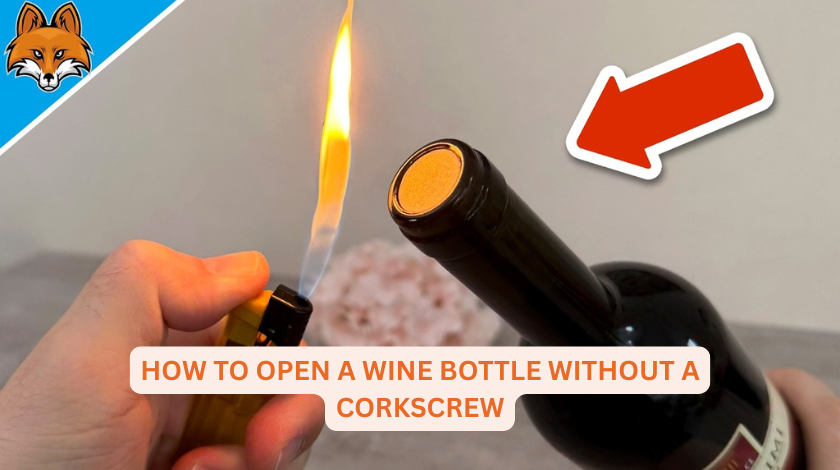
This method is for the adventurous souls and those who happen to have a lighter handy. It is based on the principle that air expands when it is heated. Between the bottom of the cork and the top of the wine, there is a small pocket of air. If you heat that air, the pressure will increase and force the cork upward.
Take your lighter and hold the flame to the neck of the bottle, specifically the area of air right below the cork. Rotate the bottle slowly so you are heating the glass evenly. If you heat only one spot, the glass might crack due to thermal shock. After about a minute of constant heat, you will hear a faint “hiss” or see the cork start to move. Eventually, the pressure will pop the cork right out. A word of warning: the neck of the bottle will be extremely hot. Do not grab it with your bare hands immediately after. Also, keep in mind that heating the wine might slightly alter its flavor, though usually, the heat is concentrated enough that the liquid remains cool.
The “Push It In” Method: The Last Resort
If all else fails and you find yourself frustrated, there is always the “push it in” method. This is exactly what it sounds like. Instead of trying to pull the cork out, you force it down into the bottle. This is often the easiest method, but it comes with a few drawbacks.
Use the handle of a wooden spoon, a blunt marker, or any long, sturdy cylindrical object. Place the bottle on a flat surface, hold the neck firmly, and push the cork down. You will feel a lot of resistance, and then suddenly, the cork will “plop” into the wine. The main downside here is that the cork is now floating in your drink. If it is an older bottle, the cork might crumble, leaving little bits of woody debris in your glass. To fix this, I recommend pouring the wine through a coffee filter or a fine mesh strainer into a decanter or a pitcher. It isn’t the most elegant way to serve wine, but it gets the job done. Also, be careful of the “splash back.” When the cork drops in, a small amount of wine often squirts out of the top like a geyser.
Safety First: Words of Wisdom
While these hacks are great, I want to emphasize that glass is unpredictable. When you apply pressure, heat, or force to a glass bottle, there is always a non-zero chance that it will break. My best advice is to always wrap the bottle in a thick towel or an old t-shirt before trying any of these methods. This protects your hands from shards if the bottle shatters and also helps soak up any accidental spills.
Furthermore, if you see the glass starting to chip or crack, stop immediately. It is better to go back to the store and buy a new bottle than to risk drinking wine that might contain microscopic glass fragments. Always inspect your wine after using an alternative opening method. If you used the screw or knife method, check for bits of cork floating on the surface and scoop them out.
My Personal Experience
I remember a camping trip a few years ago in the Blue Ridge Mountains. We had hiked for six hours, set up our tent, and were ready to enjoy a nice bottle of Malbec by the fire. Of course, we forgot the opener. We tried the key method, but the key bent. We tried the shoe method against a tree, but the bark was too soft to provide the necessary resistance. Finally, we used a long tent stake and a rock to slowly pry the cork out bit by bit. It wasn’t pretty, and we ended up having to strain the wine through a clean sock (yes, a clean one!), but that was the best-tasting wine I have ever had. The effort made the reward so much sweeter. It taught me that where there is a will, there is a way.
Conclusion
Not having a corkscrew can feel like a disaster, but as we have seen, your house is full of potential wine-opening tools. Whether you go for the mechanical precision of a screw and hammer, the physics-defying shoe-to-wall method, or the simple brute force of pushing the cork in, you have options. The key is to stay calm, be patient, and prioritize safety above all else. Wine is meant to be a relaxing experience, so don’t let a stubborn cork ruin your mood. Next time you go shopping, maybe pick up a spare corkscrew for your car or your travel bag, but if you forget, you now have the skills to save the day.
FAQ
Is it safe to open wine with a lighter?
It is generally safe if you do it correctly, but there is always a risk of the glass breaking due to heat. Always rotate the bottle and never hold the flame in one spot for too long.
Will the shoe method ruin my wine?
No, the wine will be perfectly fine. However, it might shake up any sediment in older red wines, so you might want to let the bottle sit for a few minutes before pouring.
Can I use a plastic spoon to push the cork in?
Probably not. Plastic spoons are usually too flimsy and will snap under the pressure. A wooden spoon or a heavy-duty screwdriver is a much better choice.
What if the cork breaks in half?
If the cork breaks, you can try the screw method on the remaining piece. If that doesn’t work, pushing the remaining half into the bottle is your best bet.