There is a specific kind of social anxiety that only occurs when someone hands you a bottle of wine and a corkscrew at a dinner party. All eyes are on you. You start twisting, the metal grinds, the cork begins to crumble, and suddenly you are fishing bits of tree bark out of a lovely Cabernet with a steak knife. I have been there more times than I care to admit. Before I learned the proper mechanics of these tools, I viewed them as torture devices designed to embarrass me. However, once you understand the physics of leverage and the design of the “worm” (that spiral metal bit), opening a bottle becomes a satisfying ritual rather than a stressful chore.
Wine openers come in many shapes and sizes, and while they all serve the same purpose, the technique required for each is vastly different. Whether you are using a classic waiter’s friend or a high-tech electric gadget, the goal is always the same: remove the cork cleanly without letting any debris fall into the liquid. In this guide, I will share my personal experiences and the “cheat codes” I have learned over years of hosting and tasting. We will break down the most common tools so that next time someone hands you a bottle, you can open it with the confidence of a professional sommelier.
The Waiter’s Friend: The Professional’s Choice
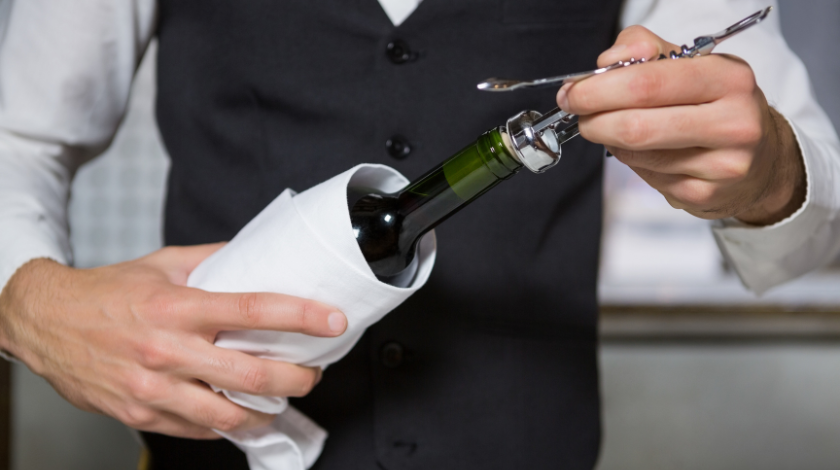
If you walk into any high-end restaurant, you will see the staff carrying a small, folding tool that looks a bit like a pocketknife. This is the waiter’s friend, also known as a sommelier knife. In my opinion, this is the only tool you actually need. It is compact, reliable, and uses a double-hinge system that makes cork removal effortless. The first thing you need to do is use the small serrated blade tucked into the handle to cut the foil. Many people try to rip the foil off with their fingernails, but that looks messy. Instead, cut the foil just below the lower lip of the bottle neck. This prevents the wine from touching the foil as you pour, which some experts say can affect the taste.
Once the foil is gone, fold out the spiral worm. This is where most people go wrong. You want to aim the tip of the worm slightly off-center. As you begin to twist it into the cork, the spiral will naturally center itself. Screw it in until only one or two turns of the spiral are visible. If you go too deep, you might pierce the bottom of the cork and send fragments into the wine. Now, flip down the first notch of the lever and rest it on the rim of the bottle. Hold the lever firmly against the rim with one hand while pulling the handle up with the other. Once the cork is halfway out, switch to the second notch of the lever to finish the job. The double-hinge is a lifesaver because it keeps the pull vertical, which prevents the cork from snapping in half.
The Winged Corkscrew: The Reliable Household Staple
The winged corkscrew is probably what you have sitting in your kitchen drawer right now. It is often called a “butterfly” opener because of the two arms that rise up as you twist the screw down. While pros often look down on these, I find them incredibly helpful for beginners because they do most of the heavy lifting for you. To use this correctly, start by placing the circular base of the opener over the top of the bottle. Ensure it is sitting level. As you turn the top handle, the screw will enter the cork, and the two side arms will slowly rise like someone reaching for the sky.
The biggest mistake I see with winged openers is people trying to “help” the arms up. Do not touch them yet. Just keep twisting the top handle until the arms are fully extended. At this point, the screw is deep enough. Now, place the bottle on a flat surface, grasp both arms, and push them down simultaneously. This action uses mechanical leverage to lift the cork straight out of the bottle. It is a very smooth motion, but be careful not to push too hard if you feel significant resistance. Sometimes, if the cork is very dry, it can get stuck. If that happens, stop and try to wiggle it manually rather than forcing the metal arms, which can sometimes bend or break.
The Lever or “Rabbit” Opener: Speed and Ease
If you host large parties where you need to open ten bottles of wine in ten minutes, the lever-style opener is your best friend. Often called the “Rabbit” because of its two long handles that look like ears, this tool is all about speed. It is also the best option for anyone who struggles with grip strength or arthritis, as it requires almost no twisting motion. I remember the first time I used one of these: I was shocked at how fast it worked. You simply clamp the “ears” around the neck of the bottle, flip the main lever forward to drive the screw in, and then pull the lever back to pop the cork out.
The trick with the Rabbit is making sure the bottle is held firmly. If the clamp slips, you can accidentally strip the cork or even crack the glass neck if you are using a cheap plastic model. Always invest in a sturdy, metal lever opener if you go this route. Another thing to watch out for is the coating on the worm. Most lever openers use a non-stick coating to help the screw slide into the cork. Over time, this coating can wear off, making the tool harder to use. If you start noticing black flakes or if the lever feels “sticky,” it might be time to replace the worm or the whole unit.
Going High-Tech: The Electric Wine Opener
We live in an era where everything is automated, so it is no surprise that electric wine openers have become incredibly popular. I used to think these were a bit of a gimmick, but I changed my mind after using one during a particularly busy Thanksgiving dinner. They are foolproof. Most of these devices are cylindrical tubes that you place over the top of the bottle. You press a button (usually the “down” arrow), and the machine does all the work of centering the screw and drilling into the cork. Once the motor sounds like it is straining slightly, you press the “up” button, and the cork is extracted.
The most important tip for an electric opener is to keep it vertical. If you hold it at an angle, the motor has to work twice as hard, and you risk breaking the cork inside the bottle. Also, make sure it is fully charged. There is nothing more frustrating than getting a cork halfway out only for the battery to die. Most modern versions come with a sleek charging base that looks quite nice on a kitchen counter. It is a great conversation piece, and honestly, it takes all the “performance anxiety” out of the process.
The Specialist: Using an Ah-So for Old Bottles
If you ever find a dusty, vintage bottle of wine in a cellar, do not use a standard corkscrew. Old corks become brittle and saturated with wine over decades. A spiral screw will often just turn the cork into sawdust. This is where the Ah-So (or two-pronged puller) comes in. It looks like a handle with two thin metal strips of different lengths. You slide the longer prong down between the cork and the glass, then the shorter one. You “walk” the prongs down by rocking the handle side to side until the handle is flush with the bottle.
To remove the cork, you twist and pull at the same time. This method hugs the cork from the sides rather than piercing it through the middle. It takes some practice, and I’ll admit I’ve accidentally pushed a few corks into the bottle while learning. But for a 30-year-old Bordeaux, it is the only safe way to go. It is a very impressive skill to show off at a dinner party, and it demonstrates that you really know your stuff when it comes to wine preservation.
What to Do When Things Go Wrong
No matter how careful you are, corks will eventually break. It happens to the best of us. If a cork snaps in half and stays in the neck, don’t panic. The worst thing you can do is keep stabbing at it. If there is enough cork left, try to re-insert your waiter’s friend at a 45-degree angle. This gives you a fresh “grip” on the remaining wood. Pull very slowly. If the cork is completely crumbled or has fallen into the wine, don’t throw the bottle away! Simply pour the wine through a fine-mesh strainer or a coffee filter into a decanter. The wine will still taste great, and your guests will appreciate your quick thinking.
Conclusion
Learning how to use a wine corkscrew is a small skill that yields big rewards. It’s about more than just getting to the liquid inside: it’s about the ceremony of the pour and the respect you show to the craft of winemaking. Whether you prefer the tactile feel of a waiter’s friend or the effortless click of an electric opener, the key is patience and alignment. Don’t rush the process. Take a second to cut the foil cleanly, center your screw, and apply steady pressure. Before you know it, you will be the person everyone looks to when the wine needs to flow.
Frequently Asked Questions (FAQ)
Q: Why do some corkscrews have a double hinge?
A: The double hinge provides two different pivot points. The first notch gets the cork moving, and the second notch provides the height needed to pull the cork completely out vertically. This prevents the cork from bending and snapping.
Q: Can I use a corkscrew on a synthetic cork?
A: Yes, but be aware that synthetic corks are much denser than natural ones. They require more force to pierce and significantly more “oomph” to pull out. A lever-style opener or a sturdy waiter’s friend is best for these.
Q: How do I clean my corkscrew?
A: Usually, a simple wipe with a damp cloth is enough. Never put a corkscrew in the dishwasher, as the high heat and harsh detergents can ruin the gears and the non-stick coating on the worm.
Q: What is the “worm” made of?
A: Most high-quality worms are made of stainless steel. Look for one that looks like a coiled spring rather than a solid screw with a thread, as the “spring” style grips the cork better without tearing it.
Q: Is it okay to use a knife if I don’t have a corkscrew?
A: It is possible, but dangerous. You can use a serrated knife to slowly “walk” the cork out, but you risk breaking the glass or cutting yourself. It is much safer to go to a neighbor and borrow a proper tool.