I remember the first time I smelled natural gas. I was twelve years old, walking past the cafeteria at my middle school, when I suddenly caught a weird smell that reminded me of rotten eggs mixed with sulfur. At that age, I didn’t know what it meant. I just knew something felt wrong. Turns out, there was a small leak in the kitchen’s gas line, and they evacuated the entire building within minutes. That memory stuck with me for decades, and it’s why I pay close attention whenever I hear about school gas evacuations.
Schools are supposed to be safe havens. We send our kids there every morning, assuming they’ll come home with homework, stories about lunch, and maybe a few complaints about math class. We don’t expect them to come home with stories about emergency evacuations, fire trucks, and the smell of gas hanging in the air. But that’s exactly what happened at Liberty High School, and it’s a story that every parent, teacher, and school administrator needs to hear—not just because it’s dramatic, but because it teaches us something important about preparedness, quick thinking, and the systems that keep our kids safe when things go sideways.
The Liberty High School Incident: A Closer Look
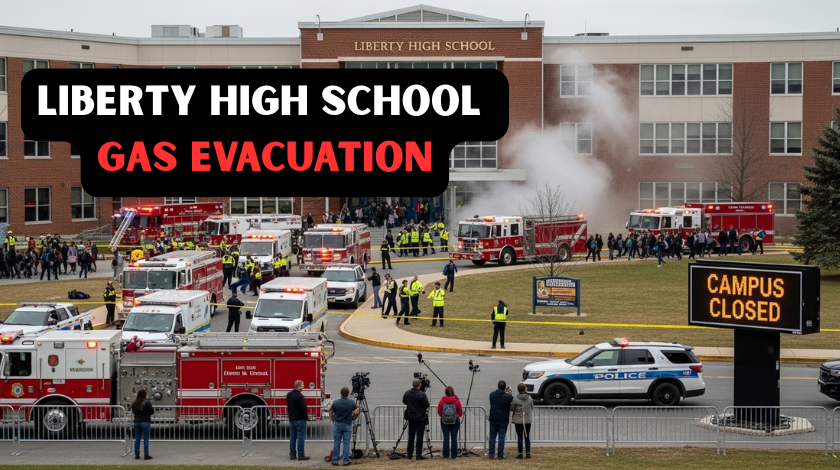
On April 24, 2024, Liberty High School in Hillsboro, Oregon, became the center of a community-wide emergency response that nobody saw coming. It was a typical Tuesday morning. Students were settling into their second-period classes. Teachers were taking attendance. The cafeteria staff was prepping for the lunch rush. And then someone smelled it—that distinctive rotten egg odor that signals natural gas or propane.
According to the Hillsboro School District’s official safety alert, the evacuation was initiated at approximately 12:00 p.m. after reports of a strong gas odor near the campus.
What made this situation particularly serious was the source: a ruptured propane gas line located near the school grounds. This wasn’t just a faint smell coming from an old stove. This was a legitimate infrastructure failure that posed real risks to everyone on campus.
The timing mattered here. Midday evacuations are actually trickier than you might think. Everyone’s awake, everyone’s spread out across different parts of the building, and the logistics of moving hundreds or thousands of students simultaneously while maintaining accountability are genuinely complex. But here’s what impressed me about how Liberty High School handled it: they didn’t hesitate. The moment the odor was confirmed, the administration issued an evacuation order. No waiting around to see if it would clear up. No hoping it was nothing—just decisive action.
My Experience with School Emergency Planning
Before I dive deeper into what happened at Liberty, let me share something personal. For three years, I served on the safety committee at my local school district—not as an administrator, but as a parent representative who asked too many questions and showed up to every meeting with a notebook and coffee. I learned more about gas leaks, fire codes, and evacuation routes than I ever expected to know.
What struck me during those meetings was how much thought goes into emergency planning that parents never see. Schools don’t just make up evacuation procedures on the fly. They follow detailed protocols that align with state regulations, coordinate with local fire departments, and practice these scenarios regularly. At Liberty High School, for instance, their district-wide safety plan includes specific provisions for utility failures and gas leaks, requiring coordination with local utility companies and first responders.
The reality is that most school administrators lose sleep over this stuff. They worry about the scenarios we don’t think about—the broken gas line during a freeze, the earthquake that ruptures pipes, the construction accident that hits something underground. And when an actual incident happens, as it did at Liberty, those sleepless nights and planning sessions get put to the test in real time.
How Gas Leaks Actually Work (Science Made Simple)
Let me break down what’s actually happening when there’s a gas leak at a school, because understanding the science helps explain why evacuations are so serious. Natural gas and propane are both fossil fuels used for heating, cooking, and powering equipment. By themselves, they’re odorless and colorless, making leaks nearly impossible to detect. That’s why gas companies add a chemical called mercaptan, which gives gas its distinctive rotten-egg or sulfur smell.
When gas leaks into an enclosed space, such as a school building, several dangerous consequences can occur. First, high concentrations of gas can displace oxygen, creating a suffocation risk. Second, and more dramatically, if the gas concentration reaches between 4% and 16% of the air volume and encounters an ignition source—like a light switch spark, static electricity, or even a cell phone—it can explode
. That’s why evacuation protocols specifically instruct people not to operate electrical devices during a gas emergency.
At Liberty High School, the leak was external—a ruptured propane line near campus—but the risk of gas migrating into buildings or creating an outdoor hazard was significant enough to warrant immediate evacuation. Propane is heavier than air, meaning it can pool in low-lying areas and travel along the ground to find ignition sources, making it particularly dangerous in outdoor spaces where students might gather.
The Evacuation Process: What Really Happens
When that gas odor was detected at Liberty High School, the evacuation process kicked into gear following established emergency protocols. Based on standard school gas leak procedures and what we know about this incident, here’s how it likely unfolded.
First, school officials immediately contacted emergency services and the local gas utility company. This isn’t a situation where you call the front desk and hope someone figures it out. Schools have direct lines to fire departments and utility emergency teams for exactly these scenarios. At the same time, the decision was made to evacuate rather than shelter in place—a critical choice that depends on whether the gas threat is internal or external.
Teachers received instructions to lead students out of the building using designated evacuation routes. Here’s something important: during gas evacuations, schools specifically avoid using fire alarm pull stations in some cases because the electrical spark from the alarm system could potentially ignite gas.
Instead, they use verbal announcements, phone systems, or other notification methods. Students were directed to predetermined assembly points located upwind and at safe distances from the building—typically at least 1,000 feet away from any potential gas concentration.
Accountability became the next critical task. Teachers took attendance using emergency rosters, checked for injuries, and reported any missing students to administrators. This process sounds simple, but imagine trying to account for 1,500 teenagers who just left their backpacks, phones, and half-eaten lunches behind as they walked out of a building that might explode. It requires training, discipline, and calm leadership.
Behind the Scenes: First Responders and School Teams
While students and teachers were assembling on the football field or in parking lots, a different kind of organized chaos was happening behind the scenes. Fire departments arrived with gas detection equipment—sophisticated instruments that can measure gas concentrations in parts per million and determine exactly where the leak originates.
Utility company technicians worked to shut off gas valves and assess the integrity of the pipeline system.
The school administration established a command center, likely near the emergency site but at a safe distance, to coordinate among first responders, district officials, and, eventually, parents. This is where those relationships built during planning meetings really matter. When the superintendent or principal knows the fire chief by name, has drilled with them, and understands each other’s capabilities, the response becomes smoother and more effective.
At Liberty High School, the investigation revealed that the propane gas line rupture was the culprit.
Repair crews had to excavate the damaged section, assess whether other parts of the line were compromised, and ensure that no gas had seeped into nearby buildings through underground pathways or ventilation systems. This process takes time—often hours—during which students and staff remain evacuated.
Parent Communication: The Good, Bad, and Ugly
Here’s where I want to get real with you. If your child’s school gets evacuated due to a gas leak, you will panic. It’s natural. Your brain will immediately go to worst-case scenarios, and you’ll want information immediately. The schools that handle this well understand that parent communication is just as critical as the physical evacuation.
During the Liberty High School incident, the district used multiple communication channels to keep parents informed. Modern school emergency notification systems can send text messages, emails, phone calls, and app notifications simultaneously. The key is speed and accuracy—parents need to know what’s happening, where their children are, when they can pick them up, and most importantly, that everyone is safe.
But here’s the hard truth: in the first 30 minutes of an emergency, information is often incomplete or changing rapidly. The school might send out an alert saying “evacuation due to gas odor” while the fire department is still determining whether it’s an actual leak or a false alarm. Then they have to update when they learn more. This creates a frustrating experience for parents who want definitive answers, but it’s better than staying silent or guessing.
The best school districts have pre-written templates for various emergency scenarios that they can customize and send quickly. They also designate specific staff members to manage social media, knowing that rumors spread faster than facts on platforms like Facebook and Nextdoor. During the Liberty evacuation, parents likely received updates about the all-clear signal only after fire officials and utility companies confirmed the building was safe to re-enter—a process that can’t be rushed, no matter how much parents want their kids home.
Prevention: Stopping Problems Before They Start
After an incident like the Liberty High School gas evacuation, the natural question is: how do we prevent this from happening again? The answer involves multiple layers of prevention, detection, and maintenance that most people never think about.
First, there’s infrastructure aging. Many schools sit on utility lines that were installed decades ago. Corrosion, ground shifting, tree root intrusion, and freeze-thaw cycles all stress underground pipes. Regular utility mapping and pipeline monitoring can identify risks before they become ruptures. Schools located near pipelines should have specific emergency plans that include direct communication protocols with utility operators.
Second, detection systems matter. While schools can’t monitor underground utility lines directly, they can install gas detection equipment in mechanical rooms, kitchens, and boiler areas where internal leaks might occur. These systems can alert maintenance staff before concentrations reach dangerous levels. Some modern systems even integrate with building automation systems to automatically shut down HVAC systems if gas is detected, preventing the circulation of contaminated air.
Third, and perhaps most importantly, there’s the human element. Every staff member in a school—from the principal to the custodian to the lunch lady—needs to know what gas smells like and what to do if they detect it. No hesitation, no “maybe it’s nothing,” no waiting to see if it clears up. The standard protocol is clear: if you smell gas, report it immediately and evacuate if the odor is strong or the source unknown.
What Other Schools Can Learn
The Liberty High School gas evacuation isn’t just a local news story—it’s a case study that every school administrator should review. Here are the key takeaways that I’ve distilled from researching this incident and comparing it to best practices across the country.
Speed beats hesitation. The schools that handle emergencies well are the ones that act quickly. Liberty High School evacuated promptly when the gas odor was detected, rather than waiting for confirmation or hoping it would dissipate. That decisiveness protected everyone on campus.
Relationships matter. Schools that have pre-existing relationships with fire departments, utility companies, and emergency management officials respond more effectively. These aren’t business relationships—they’re partnerships built on trust, regular communication, and joint training exercises.
Communication is a skill. The difference between a good emergency response and a chaotic one often comes down to how well the school communicates with parents, students, and staff. Clear, frequent, honest updates—even when the message is “we don’t know yet, but everyone is safe”—builds confidence and reduces panic.
Practice realistically. Schools should conduct evacuation drills that include scenarios such as gas leaks, where standard fire alarm procedures may need to be modified. Staff should know when to pull the fire alarm versus when to use alternative notification methods.
Documentation helps recovery. After the immediate emergency passes, thorough documentation of what happened, how the response worked, and what could be improved helps with insurance claims, regulatory reporting, and future planning. It also provides transparency to parents and the community.
Conclusion: The Day Everything Worked
When I look back at what happened at Liberty High School on that April morning, I don’t see a disaster. I see a system working exactly as it should. A potential danger was detected. Trained professionals made quick decisions. Students and staff followed procedures. First responders did their jobs. Parents were kept informed. And at the end of the day, everyone went home safe.
That’s not luck. That’s preparation. That’s the result of administrators who take safety seriously, of teachers who pay attention to their surroundings, of maintenance staff who know their buildings inside and out, and of students who—despite what we sometimes think—can actually follow instructions when it matters most.
If you’re a parent, use this story as a prompt to ask your child’s school about their emergency procedures. Do they have specific protocols for gas leaks? When was their last evacuation drill? How will they communicate with you during an emergency? These aren’t paranoid questions—they’re sensible ones that any engaged parent should feel comfortable asking.
If you’re a school administrator or teacher, take this as validation that your emergency planning work matters. Those tedious safety committee meetings, the drills that interrupt instruction time, the paperwork and protocols—they all exist for days like April 24, 2024, when everything needs to work perfectly.
And if you’re a student who was at Liberty High School that day, I hope you realize that you were part of something important. You proved that when the unexpected happens, communities can come together, stay calm, and handle it. That’s a lesson worth learning, even if the circumstances weren’t ideal.
Gas leaks are scary because they’re invisible, unpredictable, and potentially catastrophic. But the response to them doesn’t have to be. With the right preparation, training, and mindset, schools can turn potential disasters into demonstrations of competence and care. Liberty High School did exactly that, and we should all take note.
Frequently Asked Questions (FAQ)
Q: What should I do if I smell gas at my child’s school? A: Report it immediately to the nearest staff member, administrator, or school office. Do not assume someone else has already noticed. If the odor is strong, leave the area and call 911 from a safe location. Do not use light switches, cell phones, or other electrical devices near the smell, as sparks can ignite gas.
Q: How do schools decide whether to evacuate or shelter in place during a gas leak? A: The decision depends on the location and severity of the leak. External gas leaks typically require evacuation to move people away from the hazard. Internal leaks might require sheltering in place with sealed windows, and ventilation turned off if evacuation would put people in greater danger. School administrators coordinate with fire officials to make this call.
Q: Will parents be notified immediately during a school gas evacuation? A: Schools attempt to notify parents as quickly as possible through emergency notification systems, but the priority is always student safety and accounting for all children. Initial notifications may be brief, with updates following as more information becomes available. Ensure your contact information is always up to date in the school’s system.
Q: How often do schools practice gas evacuation drills? A: Most schools conduct general evacuation drills monthly or quarterly, but specific gas leak scenarios might be practiced annually or integrated into broader emergency preparedness training. Ask your school about their specific drill schedule and whether they include gas leak scenarios.
Q: What happens to students with disabilities during a gas evacuation? A: Schools are required by law to have individualized emergency plans for students with disabilities. These plans specify evacuation assistance, specialized equipment needs, and designated safe locations. Staff receive training on these procedures to ensure no student is left behind during an emergency.
Q: Can schools prevent gas leaks from happening? A: While schools can’t control external utility infrastructure, they can maintain their internal gas systems, install detection equipment, train staff to recognize warning signs, and develop strong relationships with utility companies for rapid response when issues occur.