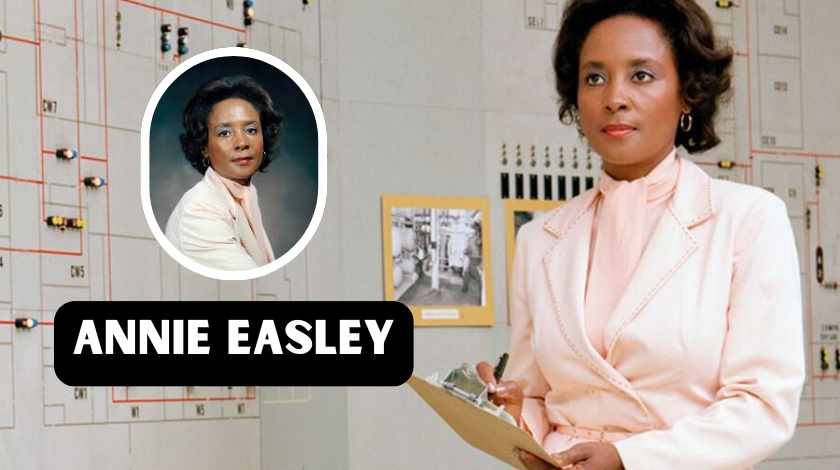
When we think about the golden age of American space exploration, our minds often drift to the astronauts who strapped themselves to the top of rockets or the mission control specialists with their headsets and green screens. We celebrate the moon landings, the shuttle launches, and the Mars rovers. But behind every successful mission, behind every line of code that guided a rocket through the atmosphere, brilliant minds were working in relative anonymity. Annie Easley was one of those minds, and her story deserves to be told not just as a footnote in NASA history, but as a central narrative about perseverance, technical excellence, and quiet revolution.
I first came across Annie Easley’s name while researching women in computing history, and what struck me immediately was how many different hats she wore throughout her career. She was a mathematician when that field barely welcomed women, a computer programmer when that profession was still being defined, a civil rights activist when speaking up could cost you your job. A mentor who understood that progress wasn’t just about personal achievement but about lifting others as you climbed. Her 34-year career at NASA spanned the transition from human computers performing calculations by hand to sophisticated machine computers running complex simulations, and she mastered every evolution of that changing landscape.
From Birmingham to NASA: An Unlikely Journey
Annie Jean Easley entered the world on April 23, 1933, in Birmingham, Alabama, during a time when the Jim Crow South made few concessions to the ambitions of African American children. Raised by a single mother who worked multiple jobs to keep food on the table, Easley learned early that education was the only reliable path forward. Her mother told her something that would become her lifelong mantra: you can be anything you want to be, but you have to work at it. That simple piece of advice carried her through decades of obstacles that would have stopped most people in their tracks.
Growing up, Easley initially dreamed of becoming a nurse, but by high school, her interests had shifted to pharmacy. She was a standout student, graduating as her class valedictorian, and in 1951, she enrolled at Xavier University of Louisiana in New Orleans to pursue studies in pharmacy. For a young Black woman in the early 1950s, this represented significant progress, but life had other plans. After two years at Xavier, Easley returned to Birmingham and married a man serving in the U.S. military. When his service took them to Cleveland, Ohio, in 1954, she found herself at a crossroads. The pharmacy program at the local university had closed, and she needed to find a new direction.
The story of how Annie Easley ended up at NASA has the quality of serendipity that marks many great careers. She was reading a local newspaper when she came across an article about twin sisters who worked as “human computers” at the Aircraft Engine Research Laboratory in Cleveland. The article mentioned that the facility, which would soon become part of NASA, was seeking people with strong mathematical skills. Easley had always excelled at math, and despite having no formal computer training or even a completed college degree at that point, she applied. Two weeks later, she started a job that would define the rest of her life.
The Human Computer Era: Where It All Began
When Annie Easley walked through the doors of the National Advisory Committee for Aeronautics (NACA) in 1955, she entered a world at once cutting-edge and antiquated. The term “computer” meant something entirely different then. Before electronic computers became standard equipment, organizations like NACA employed human computers, typically women with strong mathematical backgrounds who performed complex calculations by hand. These women were the hidden infrastructure of the space race, crunching numbers that would determine rocket trajectories, fuel consumption rates, and orbital mechanics.
Easley’s first assignment involved running simulations for the newly planned Plum Brook Reactor Facility in Sandusky, Ohio. This was serious work, the kind of calculations where a single error could have catastrophic consequences. She analyzed problems and performed calculations using nothing more sophisticated than a pencil, paper, and mechanical calculators. What makes her entry into this field even more remarkable is that when she was hired, she was one of only four African American employees among approximately 2,500 people working at the laboratory. The civil rights movement was still gathering momentum, and segregation, while technically not the law in Ohio, remained a powerful social force.
I think about what it must have been like for Easley during those early years, walking into a facility where almost everyone else looked different from her, where the unwritten rules of racial interaction in 1950s America followed her even into the supposedly progressive world of scientific research. In a 2001 interview, she recalled that she never set out to be a pioneer. She had a job to do and knew she could do it. That pragmatic approach would serve her well throughout her career, but it did not mean she was unaware of the barriers around her. She knew exactly what she was up against, but she just refused to let it stop her.
Breaking Barriers: Life as One of NASA’s First Black Employees
The discrimination Annie Easley faced at NASA was not the dramatic, headline-grabbing kind that makes it into history books. It was quieter, more insidious, woven into the fabric of daily professional life. There were the small humiliations, like being cut out of promotional photographs while her white colleagues remained in the frame. There were systemic inequities, like watching male colleagues have their advanced degrees funded by the agency while she had to pay her own way through school. There were the social exclusions, the times when she was not welcome in spaces where professional networking happened.
But Easley developed a strategy for survival and success that I find incredibly powerful. She called it “working around” people who couldn’t work with her. In her own words from that 2001 interview: “My head is not in the sand. But my thing is, if I can’t work with you, I will work around you. I was not about to be so discouraged that I’d walk away. That may be a solution for some people, but it’s not mine.” This wasn’t denial or passive acceptance of injustice. It was a tactical decision to focus her energy where it could be most effective, on the work itself rather than the barriers trying to stop her.
That focus on the work served her well as the profession of computing underwent a technological revolution. By the late 1950s and early 1960s, electronic computers were beginning to replace human computers. Many of the women who had built careers on manual calculation found themselves obsolete, pushed out of the field they had helped create. Easley took a different path. She recognized that the future belonged to those who could speak the language of these new machines, and she set about learning that language with characteristic determination.
The Centaur Rocket Project: Her Most Significant Contribution
As electronic computers became standard at NASA, Easley transitioned from a human computer to a computer programmer. She learned programming languages such as FORTRAN (Formula Translating System) and SOAP (Symbolic Optimal Assembly Program), mastering the art of writing code that enabled these machines to perform complex calculations at speeds no human could match. This transition was not easy. It required returning to school while working full-time, studying mathematics and computer science while maintaining her day job at the laboratory. But Easley understood that staying relevant meant staying educated, and she never shied away from that challenge.
Her most significant technical contribution came through her work on the Centaur project. The Centaur was a high-energy upper-stage rocket that represented a major leap forward in space technology. Unlike earlier rockets, the Centaur used a unique combination of liquid hydrogen and liquid oxygen as propellants, creating a much more powerful and efficient launch vehicle. This technology would become foundational for modern space exploration, enabling missions that would not have been possible with earlier rocket designs.
Easley’s work on the Centaur involved developing and implementing software to analyze the rocket’s systems and performance. She wrote software that helped engineers understand how the rocket would behave under various conditions, code that was literally responsible for ensuring missions succeeded. The Centaur went on to become the workhorse of American space exploration, launching satellites, probes, and, eventually, the Cassini spacecraft, which would travel to Saturn in 1997. When you look at images of Saturn sent back by that mission, you are looking at the distant results of Annie Easley’s work on a computer in Cleveland decades earlier.
But her technical contributions extended beyond space exploration, impacting our daily lives today. During the energy crisis of the 1970s, when NASA began diversifying into alternative energy research, Easley applied her analytical skills to problems closer to home. She developed code to analyze energy conversion systems and battery technologies, work that directly contributed to the development of early hybrid vehicles. The next time you see a hybrid car silently gliding down the street, remember that the mathematical foundations for that technology were laid in part by a Black woman working at NASA in the 1970s who refused to let discrimination stop her.
Fighting for Equality: Civil Rights Activism and EEO Work
Annie Easley’s commitment to justice was not confined to her personal struggle for professional respect. Long before she became a NASA employee, she was active in the civil rights movement in her home state of Alabama. In 1954, while working as a substitute teacher in Jefferson County, she helped members of her community prepare for the literacy tests that were used to prevent African Americans from registering to vote. These tests were deliberately designed to be impossible to pass, a legal mechanism for maintaining white supremacy in the segregated South. Easley worked to help her neighbors overcome these barriers, teaching them what they needed to know to exercise their constitutional rights.
This early activism informed her later work at NASA, where she served as an Equal Employment Opportunity (EEO) counselor. In this position, she helped supervisors address discrimination complaints related to race, gender, and age, working to resolve these issues at the lowest possible level before they escalated. It was delicate work, requiring both a deep understanding of institutional power dynamics and the diplomatic skills to navigate them. Easley brought the same analytical mindset to this work that she brought to her technical projects, understanding that discrimination was a system that could be analyzed, understood, and ultimately changed.
The Pantsuit Revolution: Small Acts, Big Changes
Sometimes history is made through grand gestures and dramatic confrontations, but just as often it moves forward through small acts of resistance that shift the cultural ground beneath our feet. Annie Easley understood this truth intuitively. One of my favorite stories about her involves what she called the “pantsuit revolution” at NASA. During the 1960s, women at the research center were expected to wear dresses or skirts to work, an unwritten dress code that reinforced gender distinctions and, practically speaking, made certain types of work more difficult.
Easley and her room supervisor made a pact. They would both wear pantsuits to work the next day. It sounds simple now, almost quaint, but at the time it caused what Easley described as “quite a stir.” The interesting part of the story is what happened next. Another woman approached them and said, “I was just waiting for the first one to wear pants.” That moment encapsulates an important aspect of how social change happens. One person takes a risk, and suddenly others realize they were not alone in wanting something different. As Easley put it, “We took the emphasis off of what you’re wearing. It’s more like what you’re actually producing.” That shift from appearance to substance was exactly what she stood for throughout her career.
Education and Mentorship: Paying It Forward
While working full-time at NASA and raising a family, Annie Easley returned to school in the 1970s to complete her bachelor’s degree in mathematics from Cleveland State University. This was no small feat. She was taking classes while maintaining her programming work, contributing to major NASA projects, and dealing with the reality that while her male colleagues had their education funded by the agency, she had to pay her own way. But she was determined to finish what she had started decades earlier at Xavier University.
Her commitment to education extended far beyond her own advancement. Easley became deeply involved in NASA’s outreach efforts, participating in school tutoring programs and serving as an active member of the Speaker’s Bureau. She traveled to schools and community organizations, sharing NASA’s work with students and encouraging them to consider careers in science, technology, engineering, and mathematics. She had a particular focus on reaching female students and minority students, those who might not see people who looked like them in technical roles. She wanted them to understand that the path was difficult but possible, that barriers existed but could be overcome.
I imagine her speaking to those students with the same straightforward honesty that characterized her entire career. She wouldn’t have sugarcoated the challenges, but she would have made clear that the work was worth doing. Her mother’s words, that you can be anything you want to be if you work at it, became the message she passed on to the next generation.
The Human Side of a Technical Pioneer
It is easy, when reading about historical figures in STEM, to focus entirely on their professional achievements and forget that they were full human beings with lives beyond the laboratory. Annie Easley was no exception. She was a founding member and one-term president of the NASA Lewis Ski Club, despite not taking up skiing until she was 46. She skied regularly in Colorado, Canada, and Europe, embracing a physically demanding sport that was geographically distant from her upbringing in Alabama. She was active in the annual children’s Christmas play at the research center, participated in center athletics, and was involved with the Business and Professional Women’s Association.
One of her coworkers was quoted in a Lewis News article as saying, “She loves life and encourages others to do the same.” That simple observation captures something essential about Easley’s character. She was not grimly enduring her circumstances; she was thriving despite them, building community, supporting her colleagues, and finding joy in the work and the life she had built. That ability to maintain positivity while fighting for change is rare and valuable.
Retirement and Lasting Legacy
Annie Easley retired from NASA in 1989 after 34 years of service. She had witnessed and contributed to the transformation of American space exploration from the early days of NACA through the Apollo era, the space shuttle program, and into the modern age of computer-guided missions. She had gone from performing calculations by hand to writing sophisticated computer programs that analyzed rocket systems and energy technologies. She had helped launch satellites that changed global communications and probes that expanded our understanding of the solar system.
She passed away on June 25, 2011, at the age of 78, but her legacy continues to grow. In 2015, she was posthumously inducted into the Glenn Research Center Hall of Fame, a formal recognition of her contributions to NASA and to science. In 2021, the International Astronomical Union named a crater on the moon after her, ensuring that her name would be literally etched into the celestial body that her work helped us reach. She has become one of the figures celebrated during Black History Month and Women’s History Month, and her story has helped inspire new generations of scientists and engineers.
But her most significant legacy is harder to measure. Every time a young woman or a person of color chooses to pursue a career in STEM despite doubts about whether they belong, Annie Easley’s legacy lives on. Every time someone decides to “work around” an obstacle rather than surrender to it, her philosophy endures. Every time a hybrid vehicle drives down the street or a satellite beams information around the world, her technical contributions continue to function.
Why Annie Easley Matters Today
We live in a moment when the tech industry is grappling with serious questions about diversity and inclusion. The statistics remain stark: women and minorities are underrepresented in computer science, engineering, and related fields. The barriers that Annie Easley faced have not disappeared, even if they have changed form. That is why her story remains so relevant. She provides a model for navigating systems that were not designed for people like her, and for excelling technically while also working to change the culture around you.
Her career also reminds us that the history of technology is not just the history of famous inventors and celebrated entrepreneurs. It is the history of countless individuals who wrote code, performed calculations, tested systems, and solved problems without recognition. The digital world we inhabit was built by human hands and human minds working in offices and laboratories around the world. Annie Easley was one of those builders, and acknowledging her contribution is not just about correcting historical oversight. It is about understanding how our technological reality actually came to be.
When I think about what we can learn from Annie Easley today, I keep returning to that phrase: “I just have my own attitude.” She was not trying to be a symbol or a pioneer. She was trying to do good work and live a good life. But in doing so, she became both. Her attitude, that combination of technical excellence, personal resilience, and quiet advocacy, offers a template for anyone trying to make their way in challenging circumstances.
The next time you hear about a successful rocket launch, or see a hybrid car on the road, or use a device that relies on satellite technology, remember Annie Easley. Remember that the future is built by people who show up, learn the skills needed for the moment, help others along the way, and refuse to walk away when things get difficult. That is her legacy, and it continues to shape our world in ways we are only beginning to appreciate fully.
Conclusion
Annie Easley’s life story transcends the typical boundaries of biography. She was simultaneously a brilliant mathematician, a skilled computer programmer, a civil rights activist, and a mentor who understood that progress required lifting others as she climbed. From her beginnings as a human computer at NACA in 1955, through her evolution into a programmer working on the Centaur rocket project, to her advocacy for equal employment opportunity at NASA, she demonstrated that technical excellence and social justice work could go hand in hand.
Her contributions to battery technology for hybrid vehicles show how space research can have earthly benefits that extend far beyond its original purpose. Her work on the Centaur rocket helped enable missions to Saturn and beyond. Her quiet acts of resistance, from helping Black voters pass literacy tests in Alabama to wearing pantsuits at NASA, chipped away at barriers that had stood for generations.
Annie Easley never sought fame or recognition. She wanted to do her job well and help others do the same. But in doing so, she became a pioneer whose influence continues to be felt in every satellite launch, every hybrid vehicle on the road, and every young person from an underrepresented background who chooses to pursue a career in STEM. Her mother’s advice, that she could be anything she wanted to be if she worked at it, proved prophetic. And through her legacy, that same possibility remains open to all who follow her example.
Frequently Asked Questions
Who was Annie Easley, and why is she important?
Annie Easley was an American computer scientist, mathematician, and rocket scientist who worked at NASA for 34 years from 1955 to 1989. She is important because she was one of the first African American women to work as a computer scientist at NASA, contributed critical code to the Centaur rocket project that enabled modern space exploration, and helped develop battery technology used in early hybrid vehicles. Her work bridged the gap between the era of human computers and modern machine computing.
What did Annie Easley do at NASA?
At NASA, Easley began as a human computer performing complex mathematical calculations by hand. As technology evolved, she became a computer programmer, mastering languages like FORTRAN and SOAP. She developed code for the Centaur upper-stage rocket, analyzed energy-conversion systems, researched battery technology for hybrid vehicles, and studied the effects of ozone-depleting substances on the ozone layer. Later in her career, she also served as an Equal Employment Opportunity counselor, helping address workplace discrimination.
What was the Centaur rocket project?
The Centaur was a high-energy upper-stage rocket developed by NASA that used liquid hydrogen and liquid oxygen as propellants. It was significantly more powerful than previous rockets and became essential for launching satellites, space probes, and planetary missions. Annie Easley wrote computer code that analyzed the rocket’s systems and performance, contributing to its success. The Centaur launched missions, including Cassini to Saturn, and has been described as the technological foundation of modern American space exploration.
How did Annie Easley contribute to hybrid vehicle technology?
During the 1970s energy crisis, Easley worked on alternative energy projects at NASA. She developed and implemented software to analyze energy conversion systems and battery technologies. This work contributed to understanding battery life and efficiency, which informed the development of early hybrid vehicles. The analytical methods she developed helped lay the groundwork for the energy storage systems used in modern hybrid and electric cars.
What challenges did Annie Easley face as a Black woman at NASA?
Easley faced significant racial and gender discrimination throughout her career. She was one of only 4 African American employees among 2,500 when she was hired in 1955. She experienced segregation, was cut out of promotional photographs, had to pay for her own education while colleagues received funding, and faced daily social exclusion. Despite these obstacles, she developed a philosophy of “working around” discrimination rather than letting it stop her, maintaining focus on her technical work while also advocating for equality.
What is Annie Easley’s legacy today?
Annie Easley’s legacy includes her technical contributions to space exploration and green energy, her role as a pioneer for women and minorities in STEM fields, and her advocacy for equal employment opportunity. She has been inducted into the Glenn Research Center Hall of Fame, had a moon crater named after her in 2021, and is celebrated as a “Hidden Figure” whose work was essential to NASA’s success. Her story continues to inspire students from underrepresented backgrounds to pursue careers in science and technology.