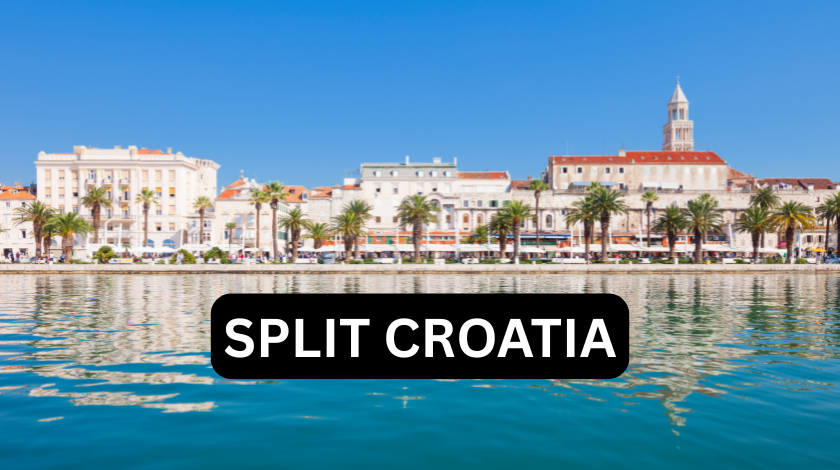
When you first arrive in Split, the first thing that hits you is not just the heat or the smell of the salt water, but the sheer weight of the history. I remember standing on the deck of a ferry coming in from the island of Hvar, watching the city skyline grow larger against the backdrop of the rugged coastal mountains. Most cities have a clear divide between the old parts and the new parts, but Split is different. It is a place where the ancient world and the modern world have collided and decided to live together in a messy, beautiful harmony. This is why I always tell people that Split Croatia is a living museum. It is not a place where you look at history through a pane of glass. It is a place where you sit on a Roman column to tie your shoe or where you buy a modern pair of sneakers inside a building that was commissioned by an emperor who died seventeen hundred years ago.
The city is built around the ruins of a massive palace, but calling it a ruin is almost an insult. It is one of the most complete and vibrant Roman structures left in the world. As you walk through the narrow, winding streets, you will notice the white limestone has been polished to a mirror-like shine by the millions of feet that have walked there over the centuries. There is a specific glow to the city at sunset when the light hits those white stones, turning everything a soft shade of orange and gold. It is a sensory experience that stays with you long after you leave. The air smells like grilled fish, roasted coffee, and the Mediterranean pine trees that line the coast. It is a city that demands you slow down and pay attention to the details, from the tiny carvings above a doorway to the way the laundry hangs between the windows of high-stone houses.
The Heart of the City: A Deep Dive into Diocletian’s Palace
To understand Split, you have to understand Diocletian’s Palace. It is the heart, the soul, and the physical center of everything. Built at the turn of the fourth century for the Roman Emperor Diocletian, this was meant to be a retirement home that could also serve as a fortress. What makes it unique is that when the Roman Empire fell, the local people didn’t tear the palace down. Instead, they moved in. They built their homes, their shops, and their churches inside the palace walls. Today, there are about three thousand people who still live within the boundaries of the palace. It is a maze of alleys where you can easily get lost, and honestly, getting lost is the best way to see it. You might turn a corner expecting another souvenir shop and instead find a quiet courtyard where a local family is having lunch and the smell of garlic and olive oil is wafting through the air.
The palace is entered through four main gates: the Golden, Silver, Iron, and Bronze gates. Each one leads you into a different section of the complex. The center of the palace is the Peristyle, a grand open court that was once the heart of imperial life. Today, it is a place where travelers gather to listen to live music in the evenings. On one side of the Peristyle is the Cathedral of Saint Domnius. It is an incredible irony of history that this cathedral, originally built as Diocletian’s mausoleum, is now one of the oldest Catholic cathedrals in the world. Diocletian was famous for persecuting Christians, yet his final resting place became a shrine to the very faith he tried to destroy. I highly recommend climbing the bell tower. The stairs are narrow and a bit steep, but the view from the top gives you a perfect perspective of the palace layout and the turquoise waters of the harbor.
Underneath the palace, you will find the substructures, often called the cellars. For centuries, these areas were filled with refuse, which actually served to preserve them perfectly. When they were finally cleared out in the mid-twentieth century, archeologists found the exact floor plan of the imperial apartments that used to sit above them. Walking through these cool, damp stone halls is an eerie experience. It feels like you have stepped back in time. Fans of the show Game of Thrones will recognize these cellars as the place where Daenerys kept her dragons. Even if you aren’t a fan of the show, the sheer scale of the Roman engineering is enough to leave you speechless. It is one of the few places in the world where you can see how an emperor lived from the ground up.
Local Life: The Pomalo Lifestyle and the Riva
If the palace is the heart of Split, then the Riva is its lungs. The Riva is the long, wide promenade that runs along the waterfront, lined with palm trees and endless rows of outdoor cafes. To a visitor, it might just look like a place to grab a drink, but to a local, the Riva is a sacred space. This is where the “Pomalo” lifestyle is most visible. Pomalo is a word that doesn’t have a direct translation in English, but it roughly means “take it easy,” “slowly,” or “no stress.” In a world that is always rushing, the people of Split have mastered the art of doing nothing, and doing it well. You will see people sitting at a cafe table for two or three hours with nothing but a small cup of espresso. They aren’t checking their watches or looking at their phones; they are talking, people-watching, and simply existing in the moment.
I remember my first morning on the Riva. I felt a bit guilty for sitting so long without “doing” anything. I had a list of museums to visit and sights to see. But after twenty minutes of watching the sunlight dance on the water and listening to the hum of conversation around me, I realized that I was experiencing the most important part of Croatian culture. The Riva is the city’s living room. It is where news is shared, where deals are made, and where romances begin. If you want to feel like a local, find a chair with a good view of the harbor, order a “kava s mlijekom” (coffee with milk), and just let the world go by. It is the best way to recharge your batteries before heading back into the crowded streets of the old town.
Another fascinating aspect of local life in Split is the “fjaka.” While pomalo is a choice to go slow, fjaka is a state of mind and body that usually happens during the heat of the afternoon. It is a kind of psycho-physical state where you have no desire for anything and your mind goes blank. It is not laziness; it is a survival mechanism for the Mediterranean heat. You will notice that between 2:00 PM and 5:00 PM, the city slows down significantly. The locals retreat into the shade, the shops might close for a few hours, and a hush falls over the stone streets. Embracing the fjaka is part of the Split experience. Instead of fighting the heat to see one more gallery, take a nap or find a shady spot in a park. You will find that you have much more energy for the evening festivities once the sun goes down.
Nature and Views: Escaping to Marjan Hill
When the stones of the city start to feel a bit too warm and the crowds of the palace get a bit too thick, there is only one place to go: Marjan Hill. Located on the western tip of the peninsula, Marjan is a massive forest park that the locals call “the lungs of the city.” It is a complete escape from the urban environment. The hill is covered in a dense forest of Aleppo pines, and the air here is noticeably cooler and fresher. There are miles of trails for walking, running, and cycling, but the real draw for most visitors is the series of viewpoints that offer the best panoramic looks at Split and the surrounding islands.
The walk up to the first viewpoint, known as Vidilica, is not too strenuous. There is a lovely cafe at the top where you can have a cold drink while looking out over the red-tiled roofs of the city. If you have the energy, I strongly suggest continuing further up. As you go higher, the noise of the city fades away entirely, replaced by the sound of crickets and the wind in the trees. You will come across tiny, ancient churches built right into the cliffs, some dating back to the thirteenth century. These stone chapels were often used by hermits who wanted to live a life of quiet contemplation. It is easy to see why they chose this spot. There is a profound sense of peace on the slopes of Marjan that you won’t find anywhere else in the region.
If you keep following the trails toward the southern side of the hill, you will eventually find your way down to the water. This is where you will find some of the best beaches in Split. While most tourists flock to the sandy but crowded Bacvice Beach on the other side of town, the locals head to Kasjuni or Bene. Kasjuni is particularly beautiful, a long crescent of pebbles tucked at the base of a steep cliff. The water here is a deep, clear emerald green, and because it faces west, it is the perfect place to watch the sunset. Swimming in the Adriatic with the cliffs of Marjan behind you and the silhouette of the islands in the distance is one of those “pinch me” moments that makes a trip to Croatia so special.
Food and Drink: Eating Like a Local
You cannot truly say you have visited Split until you have sat down for a long, multi-course meal in a “konoba.” A konoba is a traditional Dalmatian tavern, usually decorated with dark wood, stone walls, and old fishing nets. These are the places where the focus is entirely on the quality of the ingredients rather than fancy presentation. The food of Split is Mediterranean at its core, which means lots of olive oil, garlic, fresh herbs, and whatever came out of the sea that morning. I have a personal rule when I am in Split: never order fish that isn’t local. The waiters will often bring out a tray of the day’s catch for you to inspect before they take it to the kitchen to be grilled with a little bit of salt and olive oil.
One dish you absolutely must try is Pasticada. This is the king of Dalmatian cuisine. It is a slow-cooked beef dish that takes days to prepare. The meat is marinated in vinegar and lemon for twenty-four hours, then braised for hours with red wine, dried plums, figs, and root vegetables. The result is a tender, savory, and slightly sweet meat that melts in your mouth. It is traditionally served with homemade gnocchi, which are perfect for soaking up every last drop of the rich dark sauce. It is a dish usually reserved for weddings and holidays, but many traditional restaurants in Split serve it year-round. It is heavy, so make sure you are hungry before you order it, but I promise it is worth every single calorie.
To wash it all down, you need to explore the local wines. Croatia has a wine tradition that goes back thousands of years, and the region around Split is famous for its bold reds. Look for Plavac Mali, which is a relative of Zinfandel. It is a deep, dark wine with flavors of blackberries and pepper. If you prefer white wine, try Posip, which is crisp and refreshing, perfect for a hot summer evening. Don’t be surprised if you see locals cutting their wine with water. “Bevanda” is a mix of red wine and plain water, while “Gemist” is white wine mixed with sparkling water. It might seem strange to wine connoisseurs, but in the heat of a Dalmatian summer, it is the most refreshing way to enjoy a drink without getting too tipsy.
Planning Your Trip: Timing and Logistics
One of the biggest mistakes people make when visiting Split is coming at the wrong time. If you visit in July or August, you will be sharing the narrow streets with thousands of other people, and the heat can be quite punishing. The stone walls of the palace soak up the sun all day and radiate it back at night, making it feel much hotter than the actual temperature. If you have a choice, I highly recommend visiting in the shoulder seasons: May and June, or September and October. During these months, the weather is perfect for swimming and hiking, but the crowds are much more manageable. You will also find that prices for accommodation and tours are significantly lower.
When it comes to getting around, your own two feet are your best tool. The historic center of Split is entirely pedestrianized, so you won’t have to worry about cars while you are exploring the palace. However, the stones are very old and can be quite slippery, especially when it is humid or if there has been a light rain. I have seen many people take a tumble because they were wearing flip-flops or smooth-soled shoes. Bring a pair of comfortable walking shoes with good grip. If you need to go further afield, the local bus system is very reliable and inexpensive. You can buy tickets at any newspaper kiosk, which is cheaper than buying them directly from the driver.
For accommodation, you have to decide between staying inside the palace walls or just outside. Staying inside the palace is a unique experience: you get to wake up in a room that might be a thousand years old. However, keep in mind that the palace is a lively place. There are bars and restaurants everywhere, and the sound of footsteps and voices on the stone streets can carry. If you are a light sleeper, you might prefer the Veli Varos neighborhood. It is just a five-minute walk from the palace but much quieter. It is full of charming stone houses and narrow alleys that feel like a village within the city. It is where the fishermen used to live, and it still retains a very authentic, local feel.
Day Trips: Split as Your Home Base
While there is more than enough to keep you busy in Split for a few days, one of its greatest strengths is its location. It is the primary ferry hub for the entire Croatian coast, making it the perfect base for exploring the islands. You can hop on a catamaran and be on the island of Hvar in about an hour. While Hvar Town is famous for its nightlife and luxury yachts, I prefer the quieter side of the island, like Stari Grad. It is one of the oldest towns in Europe and has a much more laid-back vibe. Another great island option is Brac, home to the famous Zlatni Rat beach. The ferry ride to Supetar on Brac is very scenic and gives you a great view of the mainland mountains.
If you prefer to stay on land, there are several incredible day trips within an hour of the city. Krka National Park is a must-see. It is famous for its series of cascading waterfalls and turquoise pools. Unlike Plitvice Lakes, where you can only look at the water, you used to be able to swim at Krka, though rules have changed recently to protect the environment. Still, walking along the wooden boardwalks through the forest with the sound of rushing water all around you is a magical experience. On your way back from Krka, make sure to stop in the town of Sibenik to see the Cathedral of St. James, which is built entirely of stone without any mortar or wooden supports.
Another easy trip is to the fortress of Klis, which sits on a mountain pass overlooking Split. It has been a strategic stronghold for over two thousand years, defended by Romans, Croatians, Ottomans, and Venetians. The views from the top are absolutely staggering. You can see the entire city of Split, the Adriatic Sea, and the islands stretched out below you. It is also another major filming location for Game of Thrones, representing the city of Meereen. Because it is a bit out of the way, it doesn’t get nearly as many tourists as the city center, so you can often explore the ramparts and towers in relative peace. It is a powerful reminder of how hard people had to fight to hold onto this beautiful piece of land.
Conclusion: Why Split Captures the Heart
Many people debate whether Split or Dubrovnik is the better destination. While Dubrovnik is undeniably stunning with its massive walls and polished streets, it can sometimes feel a bit like a theme park because so few locals actually live in the old town anymore. Split is the opposite. It is a real, working city where people live, work, argue, and celebrate. There is a grit to Split that makes it feel authentic. You might see a beautiful Roman arch, and right next to it, there is a plastic chair and a modern trash can. That is the reality of a city that has never stopped being inhabited for seventeen centuries.
It is this combination of ancient grandeur and everyday life that makes Split so special. It doesn’t ask you to worship its history; it asks you to live in it. Whether you are drinking wine in a cellar that once held an emperor’s supplies, hiking through the pine forests of Marjan, or simply sitting on the Riva and practicing the art of pomalo, Split has a way of getting under your skin. It is a place that teaches you that history isn’t just something that happened in the past; it is the foundation we walk on every single day. When you finally leave, you don’t just take photos with you; you take a little piece of that Mediterranean soul.
Frequently Asked Questions
Is the water in Split clean enough to swim in?
Absolutely. The Adriatic Sea around Split is incredibly clear and clean. Even at the beaches near the city center, like Bacvice or Kasjuni, the water quality is regularly tested and is usually excellent.
Do I need to tip in restaurants in Split?
Tipping is appreciated but not mandatory. In casual cafes, people usually just leave the small change. In a sit-down restaurant, a tip of 10% is considered very generous and is a nice way to show appreciation for good service.
Is it easy to find English speakers in Split?
Yes, most people in Split, especially the younger generation and those working in tourism, speak excellent English. You will have no trouble navigating the city, ordering food, or asking for directions.
What is the currency in Croatia?
As of January 2023, Croatia uses the Euro. It is always a good idea to have some cash on hand for smaller shops or markets, although credit cards are widely accepted in most restaurants and hotels.
Can I visit the islands and return to Split in one day?
Yes, the ferry and catamaran schedules are designed to allow for day trips. You can easily take a morning boat to Hvar, Brac, or Vis and return in the evening. Just make sure to check the seasonal schedules as they change throughout the year.